

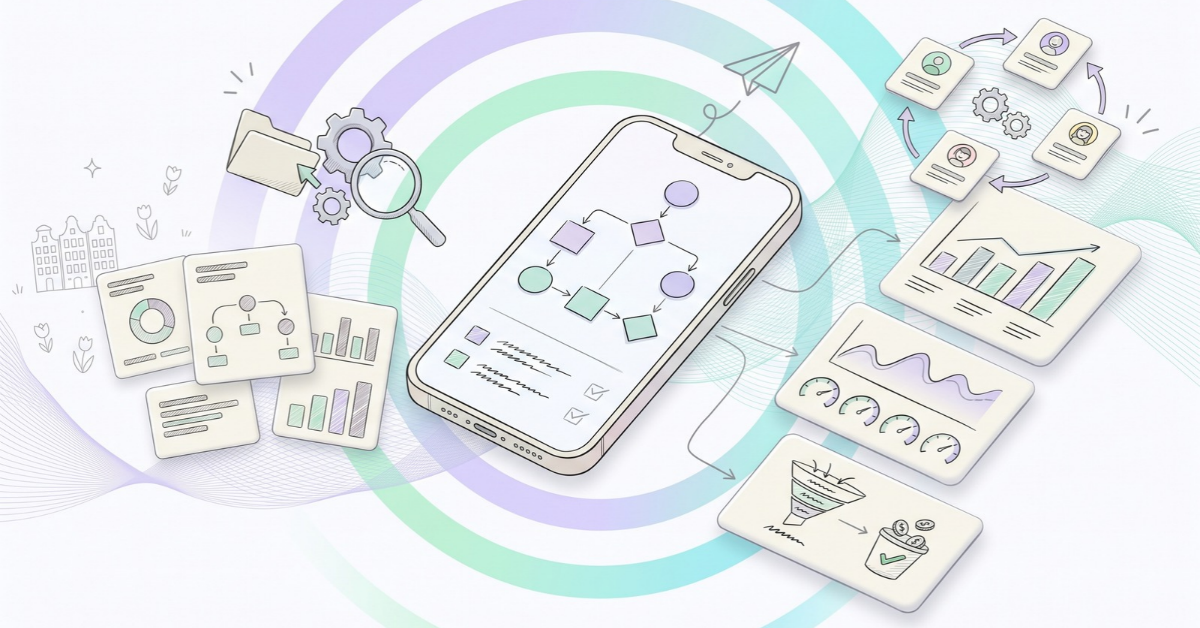
To advertise an app effectively to high-intent users, focus on targeting people who are actively searching for the solutions your app provides, using intent-based signals such as search behavior, app-category engagement, and competitor-app usage. The most effective approach combines search advertising on platforms like Apple Search Ads and Google with precise audience targeting on Meta and TikTok, using lookalike audiences and behavioral data to reach users who are ready to download and engage.
Success comes from understanding that high-intent users show clear signals of readiness to act—whether through their search queries, app-usage patterns, or engagement with similar products. By targeting these signals across the right platforms with compelling creative and clear value propositions, you can significantly improve your app’s conversion rates and user quality.
What Are High-Intent Users in App Marketing?
High-intent users are people who show clear behavioral signals that they’re actively looking for a solution your app provides and are likely to download, install, and engage with it meaningfully. These users demonstrate readiness to take action through their search behavior, app-usage patterns, or engagement with content related to your app’s category.
Unlike broad audience targeting, high-intent users have moved beyond casual browsing. They’re researching specific problems, comparing solutions, or actively searching for apps in your category. For example, someone searching “best budgeting app” or “parking app Amsterdam” shows much higher intent than someone who simply fits your demographic profile.
The value of targeting high-intent users lies in their conversion potential. These users typically have higher download rates, better retention rates, and more valuable in-app actions because they’re genuinely motivated to solve a problem your app addresses. This makes your advertising spend more efficient and improves your overall return on ad spend.
How Do You Identify High-Intent User Signals?
High-intent user signals fall into three main categories: search behavior, app-engagement patterns, and competitive-analysis data. Search queries containing specific keywords, problem statements, or comparison terms indicate strong intent, while users who have downloaded similar apps or engaged with competitor content show category interest.
Search behavior provides the clearest intent signals. Users searching for specific app categories, feature combinations, or problem-solving terms demonstrate immediate need. For instance, searches like “expense tracking app,” “find parking spots,” or “mobile banking security” all indicate users who are ready to download relevant solutions.
App-engagement patterns reveal intent through user actions. People who have recently downloaded apps in your category, spent significant time in competitor apps, or engaged with app store listings show category interest. Additionally, users who visit your website, read app-related content, or engage with your social media demonstrate awareness-stage intent that can be nurtured into downloads.
Behavioral data from platforms like Facebook and Google also reveals intent through interests, life events, and recent activity. Someone who recently moved to a new city might show high intent for local-service apps, while users engaging with financial content might be ready for fintech solutions.
Which Advertising Platforms Work Best for High-Intent App Users?
Apple Search Ads and Google Ads App campaigns deliver the highest-intent users because they target people who are actively searching for apps like yours. These platforms capture users at the exact moment they’re looking for solutions, making them ideal for converting high-intent traffic into downloads.
Apple Search Ads excels for iOS targeting because it places your app directly in App Store search results when users search relevant keywords. This platform captures users with immediate download intent since they’re already in the App Store looking for solutions. The targeting options allow you to focus on specific keywords, competitor apps, and user segments.
Google Ads App campaigns leverage Google’s vast search network and machine learning to find high-intent users across Search, YouTube, Google Play, and the Google Display Network. The platform uses your app’s data to automatically optimize for users most likely to complete valuable actions, not just downloads.
Meta (Facebook and Instagram) and TikTok work well for high-intent targeting through lookalike audiences based on your best users, detailed interest targeting, and retargeting of website visitors or app users. While these platforms don’t capture search intent directly, they excel at reaching users who match the behavioral patterns of your high-value customers.
How Do You Set Up Intent-Based Targeting on Apple Search Ads?
Intent-based targeting on Apple Search Ads focuses on keyword selection, competitor targeting, and audience refinement to reach users actively searching for apps in your category. Start by targeting high-intent keywords that describe your app’s core function, then expand to competitor app names and category-specific terms.
Begin with exact-match keywords that directly describe your app’s purpose. If you have a fitness app, target terms like “workout tracker,” “fitness planner,” or “gym app.” These specific terms capture users with clear intent to find and download fitness solutions.
Competitor targeting allows you to show your app when users search for competing apps. Add competitor app names as keywords to capture users already familiar with your category who might be comparing options or looking for alternatives.
Use Search Match strategically to discover new high-intent keywords. Apple’s algorithm will show your ads for relevant searches, and you can analyze the Search Terms report to identify which queries drive quality installs. Add high-performing terms as exact-match keywords and exclude irrelevant searches.
Refine your targeting with audience segments based on user demographics, location, and device type. Focus your budget on segments that show the best combination of volume and conversion rates to maximize your return on ad spend.
What Targeting Options Capture High Intent on Google and Meta?
Google App campaigns capture high intent through custom-intent audiences, in-market audiences, and keyword targeting that reaches users actively researching solutions your app provides. Meta’s high-intent options include lookalike audiences, detailed targeting based on behaviors and interests, and retargeting of engaged users.
Google’s custom-intent audiences let you target users who have searched for specific terms related to your app. Create audiences based on keywords like “budget tracking app” or “parking finder” to reach people actively searching for your solution category. In-market audiences target users Google identifies as actively researching and comparing products in your category.
For Google App campaigns, focus on conversion-based bidding strategies that optimize for valuable in-app actions rather than just installs. This helps the algorithm find users who are more likely to complete meaningful actions after downloading your app.
Meta’s lookalike audiences based on your highest-value users often capture high intent because they target people with similar characteristics and behaviors to your best customers. Create lookalikes from users who complete key in-app actions, make purchases, or show high engagement levels.
Detailed targeting on Meta should focus on specific interests, behaviors, and life events that indicate readiness for your app. Target users interested in your app’s category, competitors, or related topics. Behavioral targeting can capture users who have recently moved, changed jobs, or experienced life events that create a need for your app’s solution.
How Do You Measure Success When Targeting High-Intent Users?
Success with high-intent user targeting should be measured through post-install engagement metrics, lifetime value, and retention rates rather than just install volume. High-intent users should show higher day-1, day-7, and day-30 retention rates, complete more valuable in-app actions, and generate higher revenue per user.
Track key performance indicators that reflect user quality: retention rates, session length, feature adoption, and conversion to paid features or purchases. High-intent users typically show 20–40% higher retention rates compared to broad audience targeting because they downloaded your app to solve a specific problem.
Monitor your cost per acquisition (CPA) for valuable actions, not just installs. High-intent campaigns might have a higher cost per install but should deliver a lower cost per valuable action because more users complete meaningful interactions with your app.
Analyze cohort performance to understand long-term value. High-intent users often show stronger month-over-month retention and higher lifetime value, making them worth the potentially higher acquisition costs. Track revenue per user, subscription rates, and in-app purchase behavior to validate your targeting effectiveness.
Use attribution platforms like Adjust or AppsFlyer to measure the full customer journey and identify which campaigns drive the highest-quality users. This data helps you optimize your targeting and budget allocation across platforms to focus on sources that deliver genuine business value.
Ready to start targeting high-intent users for your app? We specialize in performance marketing strategies that connect your app with users who are ready to download, engage, and convert. Our team combines platform expertise with data-driven optimization to help you reach the right users at the right moment, maximizing both your advertising efficiency and your app’s growth potential.
Frequently Asked Questions
How much budget should I allocate to high-intent targeting versus broader audience campaigns?
Start by allocating 60-70% of your budget to high-intent targeting since these users typically deliver 2-3x better conversion rates and retention. Reserve 30-40% for broader campaigns to maintain discovery and reach new user segments. Monitor your cost per valuable action across both approaches and adjust allocation based on performance data.
What's the minimum daily budget needed to see results with Apple Search Ads and Google App campaigns?
For Apple Search Ads, start with at least $50-100 per day to gather meaningful data and compete effectively for high-intent keywords. Google App campaigns typically need $100-200 daily minimum to allow their machine learning algorithms to optimize properly. Smaller budgets often lead to inconsistent delivery and poor optimization.
How long does it take to see meaningful results from high-intent targeting campaigns?
Initial download data appears within 24-48 hours, but meaningful performance insights require 7-14 days of data collection. For platforms using machine learning optimization like Google App campaigns, allow 2-3 weeks for algorithms to learn and optimize. Retention and lifetime value metrics need 30-60 days to provide reliable insights for campaign optimization.
Should I target competitor app names directly in my campaigns?
Yes, competitor targeting is highly effective for capturing high-intent users who are already familiar with your app category. Focus on direct competitors with similar functionality rather than broadly popular apps. Monitor trademark policies on each platform and ensure your ad creative clearly differentiates your app’s unique value proposition.
What are the most common mistakes when setting up high-intent campaigns?
The biggest mistakes include targeting keywords that are too broad, optimizing for installs instead of valuable actions, and not excluding irrelevant search terms. Many advertisers also fail to set up proper conversion tracking for post-install events, making it impossible to measure true campaign effectiveness and optimize for user quality.
How do I know if my high-intent targeting is actually working compared to regular campaigns?
Compare key quality metrics between campaign types: high-intent campaigns should show 20-40% higher day-7 retention, 30-50% higher session duration, and significantly better conversion rates to paid features. Track cost per valuable action rather than just cost per install—high-intent users should deliver lower costs for meaningful engagement despite potentially higher install costs.
Can I use high-intent targeting strategies for brand new apps with no user data?
Yes, but start with keyword-based targeting on Apple Search Ads and Google rather than lookalike audiences that require existing user data. Focus on specific problem-solving keywords your app addresses and competitor terms. As you gather 100-1000 quality users, you can then create lookalike audiences on Meta and expand your high-intent targeting options.
Related Articles
- 6 ways to find your app's biggest drop-off point
- Why don't users open my app a second time?
- How do I know if our app measurement setup is outdated?
- 5 reasons switching app tools feels riskier than staying
- How do you advertise an app to increase user retention?
- What role does creative content play in app advertising?
- What is the difference between iOS and Android A/B testing options?
- What are backend keywords on iOS?
- What is app store keyword research?
- How do you find the right keywords for your app?

 EN
EN  NL
NL