

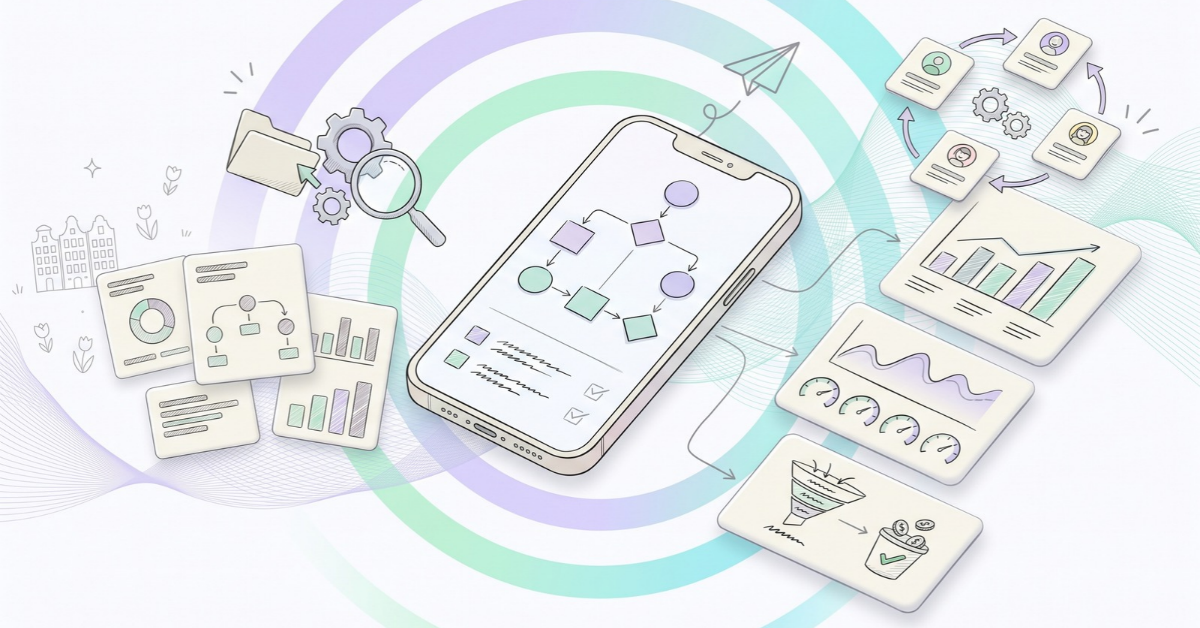
App Store Optimization metrics help you track your app’s visibility, downloads, and user quality across iOS and Android platforms. The most important metrics include keyword rankings, conversion rates, organic downloads, and user retention rates. These measurements guide your optimization decisions and reveal which strategies actually drive sustainable app growth.
What are the most important ASO metrics you should actually track?
Track keyword rankings, conversion rates, organic downloads, and user retention rates as your core App Store Optimization metrics. These four measurements directly impact your app’s visibility and revenue while showing the quality of users you’re attracting through organic search.
Keyword rankings show how well your app appears for relevant search terms in both the App Store and Google Play. You want to monitor your position for target keywords and track changes over time. Rising rankings typically lead to more organic visibility and downloads.
Conversion rates measure how many people install your app after viewing your store listing. This metric reveals how compelling your screenshots, description, and reviews are to potential users. A good conversion rate varies by category but typically ranges from 15–30% for most apps.
Organic downloads indicate how many people find and install your app through search rather than paid advertising. This metric shows the true effectiveness of your App Store Optimization efforts and represents the most valuable users, since they actively searched for solutions like yours.
User retention rates tell you if the people finding your app through ASO actually stick around. Day 1, day 7, and day 30 retention rates help you understand whether your store listing attracts the right audience and sets proper expectations.
How do you measure app store visibility and keyword performance?
Monitor your keyword positions, search impression share, and organic traffic sources using ASO tools and app store analytics. Track how your app ranks for target keywords and measure the volume of searches that lead to your store listing views.
Keyword position tracking shows where your app appears in search results for specific terms. You’ll want to track both branded keywords (your app name) and generic keywords (category terms like “fitness tracker” or “photo editor”). Position changes indicate whether your optimization efforts are working.
Search impression share reveals how often your app appears in search results compared to total available impressions. This metric helps you understand your visibility potential and identify opportunities to capture more organic traffic through better optimization.
App Store connect show downloads by source (App Store search, App Store browse, app referrer, web referrer and campaigns), not by keyword. Google Play Console show you which keywords drive the most traffic, helping you focus your optimization efforts on terms that actually bring users to your app.
Category rankings also matter for visibility, especially if you can reach the top charts in your category. Many users browse by category rather than searching for specific terms, making category position another important visibility metric to track.
What’s the difference between downloads and quality user acquisition metrics?
Downloads measure quantity, while quality metrics like retention rates, lifetime value, and engagement show user value. Total downloads look impressive but don’t tell you if users actually use your app or generate revenue after installing.
Download numbers can mislead you about your App Store Optimization success. You might attract many downloads with flashy screenshots or misleading descriptions, but if users immediately delete your app, those downloads don’t contribute to sustainable growth.
User retention rates reveal the real quality of your organic traffic. If users who find your app through search stick around and use it regularly, your ASO strategy is attracting the right audience. Poor retention suggests your store listing isn’t setting accurate expectations.
Lifetime value (LTV) measures the revenue each user generates over time. Users acquired through organic search often have higher LTV because they actively sought solutions like yours. This makes them more valuable than users acquired through broad advertising campaigns.
Engagement metrics like session duration, screens per session, and feature usage show how well your app delivers on the promises made in your store listing. High engagement from organic users indicates your ASO strategy attracts genuinely interested users.
How do conversion rates impact your app store optimization success?
Conversion rates determine how many store visitors become users, directly affecting your organic growth potential. Higher conversion rates mean more downloads from the same amount of organic traffic, multiplying the impact of your keyword ranking improvements.
Your app store conversion funnel includes several stages where you can lose potential users. People search for keywords, see your app in results, tap to view your listing, scroll through your screenshots and description, then decide whether to install. Each stage offers optimization opportunities.
Screenshot engagement affects conversion rates significantly, since most users make quick decisions based on visual elements. Your first screenshot should clearly show your app’s main benefit, while subsequent screenshots can highlight key features and use cases.
App description optimization influences conversion rates, especially the first few lines that appear without expanding. This preview text should immediately communicate your app’s value proposition and main benefits to convince users to install.
Review ratings and recent feedback impact conversion rates because users trust social proof. Maintaining good ratings while encouraging satisfied users to leave reviews helps improve your conversion rate and supports better keyword rankings.
Which user engagement metrics reveal your ASO strategy effectiveness?
Track user retention rates, session duration, and in-app conversion events to validate your ASO strategy effectiveness. These post-install metrics show whether your store listing attracts users who actually engage with your app long-term.
Day 1, day 7, and day 30 retention rates reveal if your ASO strategy attracts the right audience. Users who find your app through organic search should have good retention rates because they actively looked for solutions like yours. Poor retention suggests your store listing attracts the wrong users.
Session duration and frequency show how engaged your organic users are with your app. Longer sessions and more frequent usage indicate your ASO strategy successfully communicates your app’s value and attracts genuinely interested users rather than casual browsers.
In-app conversion events like purchases, subscriptions, or key feature usage help you understand the quality of users acquired through organic search. If organic users convert to paid features or complete important actions, your ASO strategy is working effectively.
User feedback and support requests from organic users provide qualitative insights into your ASO effectiveness. If users frequently ask about features you prominently display in screenshots, your store listing might be unclear or misleading.
These engagement metrics help you refine your ASO strategy over time. When you see strong engagement from organic users, you can double down on the keywords and messaging that attract those high-quality users. Poor engagement signals the need to adjust your store listing to set better expectations.
Measuring the right App Store Optimization metrics helps you make data-driven decisions that improve your app’s organic growth. Focus on metrics that show both visibility and user quality rather than vanity metrics that don’t impact your bottom line. If you need help implementing a comprehensive measurement strategy for your app, we offer App Store Optimization services that track the metrics that matter most for sustainable app growth.
Frequently Asked Questions
How often should I check my ASO metrics to avoid over-optimizing?
Check keyword rankings and conversion rates weekly, but wait at least 2-4 weeks before making significant changes to your store listing. App stores need time to process your optimizations, and frequent changes can actually hurt your rankings. Monitor daily downloads and user feedback more frequently to catch any immediate issues.
What's a realistic timeline to see improvements in my ASO metrics after making changes?
Expect to see initial ranking changes within 1-2 weeks, but meaningful improvements in organic downloads typically take 4-8 weeks. Conversion rate improvements from better screenshots or descriptions can show up within days, while keyword ranking improvements require more patience as app stores evaluate your listing’s performance over time.
Should I focus on improving rankings for high-volume keywords or less competitive ones first?
Start with medium-competition keywords where you can realistically rank in the top 10-20 positions. High-volume keywords are often too competitive for newer apps, while very low-competition terms may not drive meaningful traffic. Target keywords with decent search volume between 10 to 30 where you currently rank between positions 20-50.
How do I know if my conversion rate is actually good compared to my competitors?
Conversion rates vary significantly by app category and price point. Free apps typically see 15-30% conversion rates, while paid apps may see 1-5%. Compare your performance to category benchmarks using ASO tools, but focus more on improving your own conversion rate over time rather than obsessing over competitor comparisons.
What should I do if my keyword rankings are improving but organic downloads aren't increasing?
This usually indicates a conversion rate problem or that you’re ranking for keywords with low search volume. Audit your store listing’s visual elements, especially your app icon and first screenshot, and verify that your target keywords actually have sufficient search traffic using ASO tools like Sensor Tower or apptweak.
Can focusing too much on ASO metrics hurt my app's overall performance?
Yes, optimizing solely for ASO metrics without considering user experience can backfire. If you attract users with misleading store listings to boost downloads, you’ll see poor retention rates and negative reviews that ultimately hurt your rankings. Always ensure your store listing accurately represents your app’s actual functionality and value.
How do I track ASO metrics for apps that target multiple countries or languages?
Set up separate tracking for each major market since keyword performance varies significantly by country and language. Use ASO tools that support multi-market tracking, and prioritize markets that generate the most revenue for your app. Start with English-speaking markets, then expand to other languages where you see organic traction.
Related Articles
- Singular vs AppsFlyer: which reports app performance better?
- Why do I have too many dashboards for app marketing?
- What is the role of a mobile measurement partner in app advertising?
- How long does it take to see results when you advertise an app?
- How does retargeting help you advertise your app?
- What is the difference between organic and paid app installs?
- What is app store personalization?
- What are in-app review prompts and how do they work?
- What is keyword density in app store optimization?
- 5 templates for responding to negative app store reviews

 EN
EN  NL
NL