
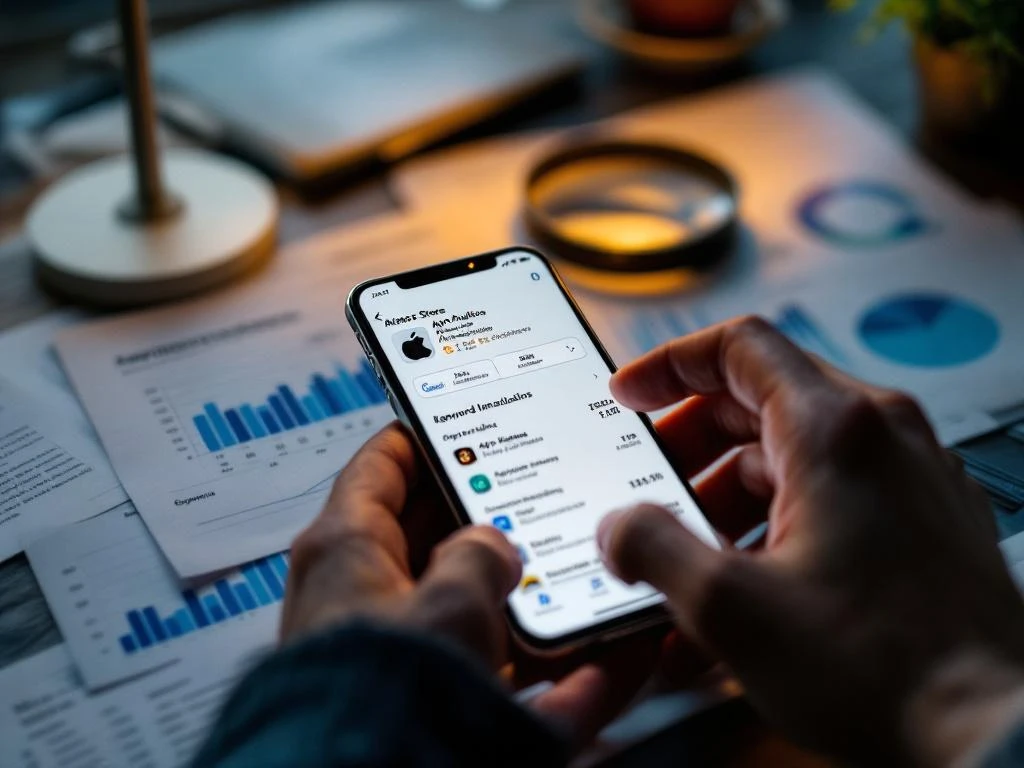
Apple Search Ads and organic App Store Optimization work together as complementary strategies for app visibility. Apple Search Ads provide immediate paid placement in search results, while organic ASO improves your natural ranking through optimization techniques. Both target the same keywords but serve different purposes in your overall app marketing strategy.
What exactly is the difference between Apple Search Ads and organic ASO?
Apple Search Ads are paid advertisements that appear at the top of App Store search results. Organic App Store Optimization (ASO), by contrast, focuses on improving your app’s natural ranking through strategic metadata, keyword, and visual optimization. With Apple Search Ads, you pay for each tap or install. With organic ASO, you earn visibility without paying for individual clicks.
The fundamental difference lies in timing and cost structure:
- Apple Search Ads deliver instant visibility but require ongoing budget investment. You can launch a campaign today and appear in search results within hours.
- Organic ASO takes weeks or months to show results but provides sustainable, long-term visibility without per-click costs.
There’s also a trust dynamic worth noting. Users often trust organic results more than paid placements, which can lead to higher conversion rates for organic downloads. Organic ASO also captures broader search traffic beyond your paid keyword targets — searches you may not be bidding on at all.
How do Apple Search Ads impact your organic App Store rankings?
Apple Search Ads can positively influence your organic rankings by increasing download volume and user engagement signals. When paid campaigns drive more downloads, those downloads contribute to your app’s popularity metrics — a factor the App Store algorithm uses for organic ranking. Higher download velocity signals to Apple that your app is relevant and in demand for specific keywords.
The relationship works through several factors:
- Download velocity: More downloads from paid campaigns improve the organic ranking signal for targeted keywords.
- Engagement quality: If users acquired through ads engage positively — high ratings, long session times, low uninstall rates — those signals strengthen your organic ranking potential.
- Keyword intelligence: Apple Search Ads reveal which keywords actually convert, helping you refine your app title, subtitle, and keyword field for organic ASO.
That said, the impact isn’t immediate or guaranteed. Organic rankings depend on many factors beyond download volume, including keyword relevance, user ratings, and competition. Apple Search Ads create opportunities for organic improvement, but your app still needs strong fundamentals — compelling visuals, clear descriptions, and positive user experiences — to hold those gains.
Which should you prioritize first – Apple Search Ads or organic optimization?
Start with organic ASO before launching Apple Search Ads campaigns. Your app store listing determines how well paid traffic converts, so optimizing it first is the logical sequence. Without a strong listing, you’ll pay to drive users to a page that doesn’t convince them to download.
Organic ASO also strengthens your paid performance. Apple factors organic relevance into ad quality scores and costs, so a well-optimized listing can lower your cost-per-tap and improve ad placement. Your title, description, screenshots, and preview videos all need to be conversion-ready before you invest in driving traffic to them.
Budget considerations reinforce this order. ASO requires time investment rather than ongoing spend, making it accessible for apps with limited marketing budgets. You can optimize keywords, improve visual assets, and refine your description without recurring costs.
Competitive markets may call for a combined approach from the start, however. If your app targets highly competitive keywords where organic traction takes significant time, Apple Search Ads can provide immediate visibility while your organic efforts build momentum. Apps with urgent growth targets or seasonal relevance often need paid visibility to capture time-sensitive opportunities.
How do you create a strategy that combines both Apple Search Ads and ASO?
Align your keyword targeting across both channels
Use the same core keywords in your Apple Search Ads campaigns and your organic elements — app title, subtitle, and keyword field. This alignment reinforces your relevance signals and maximizes visibility for the terms that matter most. Use paid ads to boost competitive primary keywords or test secondary terms you’re not yet ranking for organically.
Let paid data inform your organic strategy
Start with comprehensive keyword research that serves both strategies. Monitor Apple Search Ads performance to discover high-converting terms you can fold into your organic ASO. Paid campaign data is one of the most reliable signals for identifying which keywords actually drive installs — use it.
Allocate budget based on your goals and timeline
Prioritize organic optimization first, ensuring your listing converts well. Then invest in Apple Search Ads to amplify visibility for strategic keywords. Track how paid campaigns influence your organic rankings and adjust budget distribution based on performance — not assumptions.
Monitor paid and organic metrics together
Track organic keyword rankings alongside Apple Search Ads performance to understand how they influence each other. Monitor overall download volume, user acquisition costs, and lifetime value across both channels. Use App Store Optimization insights to refine your paid targeting, and apply paid campaign learnings to improve your organic keyword strategy.
Regular optimization keeps both strategies working in sync. Update your organic keywords based on successful paid campaign terms. Adjust your Apple Search Ads targeting as your organic rankings improve. This continuous refinement ensures paid and organic efforts support — rather than compete with — each other.
Frequently Asked Questions
How much budget should I allocate between Apple Search Ads and organic ASO efforts?
A typical starting allocation is 70% of your resources toward organic ASO and 30% toward Apple Search Ads. Since ASO requires mainly time investment upfront while ads need ongoing spend, focus most initial efforts on optimizing your listing. Once your conversion rate is strong (above 15-20%), gradually increase your paid budget to amplify high-performing keywords.
Can running Apple Search Ads hurt my organic rankings if I stop the campaigns suddenly?
Stopping Apple Search Ads won’t directly hurt your organic rankings, but you may see a temporary dip in overall downloads and visibility. The organic ranking improvements gained from increased download velocity and engagement during your paid campaigns should persist. However, maintain consistent organic optimization efforts to sustain the ranking benefits you’ve built.
What's the biggest mistake apps make when combining Apple Search Ads with ASO?
The most common mistake is targeting completely different keywords in paid campaigns versus organic optimization. This creates conflicting relevance signals and wastes opportunities to reinforce your app’s keyword associations. Always align your core keywords across both strategies, using paid ads to either boost your primary organic targets or test secondary keyword opportunities.
How long does it take to see organic ranking improvements from Apple Search Ads campaigns?
You can typically see organic ranking improvements within 2-4 weeks of running successful Apple Search Ads campaigns, provided your app maintains good user engagement metrics. The key is sustained download volume and positive user signals like high ratings and low uninstall rates. Apps with stronger engagement signals see faster organic improvements.
Should I pause Apple Search Ads once my organic rankings improve significantly?
Don’t pause Apple Search Ads entirely once you achieve strong organic rankings. Instead, shift your paid strategy to target secondary keywords, competitor terms, or seasonal opportunities where organic ranking is difficult. Use Apple Search Ads strategically to maintain market share and capture additional traffic that organic rankings alone might miss.
How do I know if my Apple Search Ads are actually helping my organic ASO performance?
Track your organic keyword rankings before, during, and after running paid campaigns for the same terms. Monitor overall download velocity, user rating trends, and organic traffic growth. Use App Store Connect analytics to compare organic discovery metrics during paid campaign periods versus organic-only periods. Positive correlation between paid activity and organic improvements indicates successful synergy.
Related Articles
- Why does my app link work on Android but not iOS?
- 6 elements to A/B test on your app store listing
- AppsFlyer vs Singular: pricing compared for app marketing
- What is a CPI model and how does it work for app advertising?
- How do landing pages help you advertise your app effectively?
- How do you advertise an app using Apple Search Ads?
- How do you advertise an app on social media platforms?
- Why does my brand app need an app store optimization strategy?
- What are custom product pages on iOS?
- What is app store optimization?

 EN
EN  NL
NL