

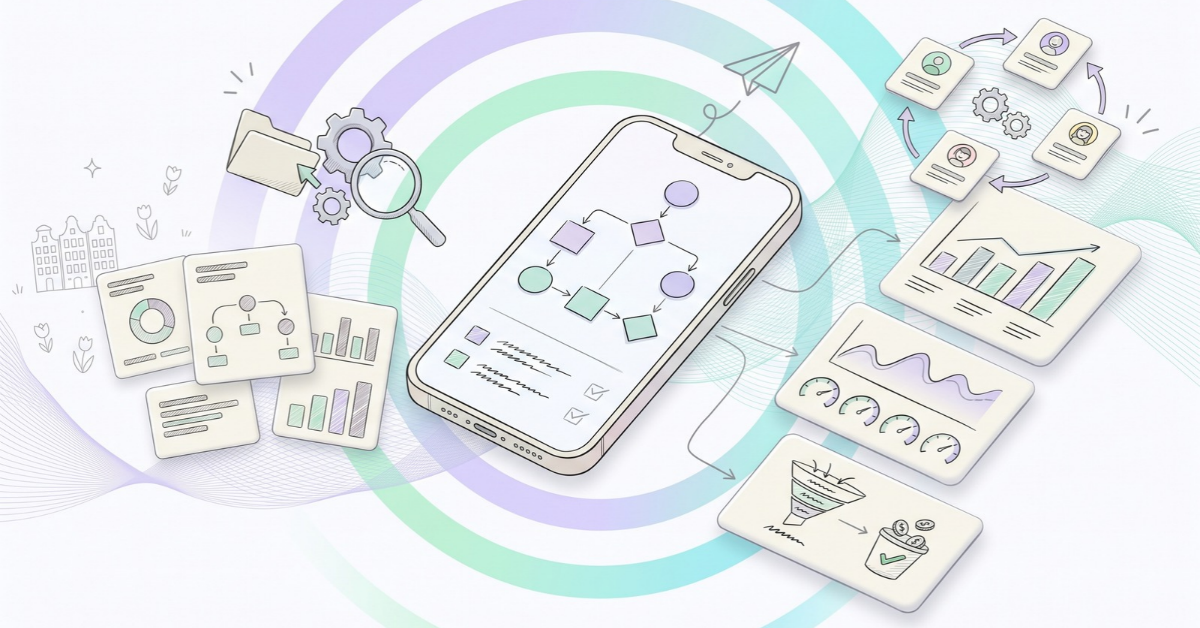
Programmatic advertising revolutionizes how you promote your app by automating the buying and placement of ads across multiple platforms in real time. Instead of manually negotiating ad placements, programmatic technology uses algorithms and data to purchase the most relevant ad inventory at optimal prices, targeting users most likely to download and engage with your app.
This automated approach helps you reach potential users more efficiently while maximizing your advertising budget through precise targeting and real-time optimization.
What Is Programmatic Advertising for Mobile Apps?
Programmatic advertising for mobile apps is an automated system for buying and placing app ads across digital platforms using real-time bidding and machine learning algorithms. This technology eliminates manual ad buying by automatically purchasing ad inventory that matches your target audience criteria within milliseconds.
The system works by analyzing user data, app preferences, and behavioral patterns to determine which users are most likely to download your app. When a user opens an app or website, the programmatic platform instantly evaluates whether the user fits your target profile and places a bid for that ad space. If your bid wins, your app ad appears to that user immediately.
This approach differs significantly from traditional advertising methods, where you would manually select specific apps or websites for ad placement. Instead, programmatic advertising focuses on reaching the right users regardless of where they are, making your campaigns more flexible and data-driven.
How Does Programmatic Advertising Work for App Campaigns?
Programmatic advertising works for app campaigns through real-time bidding auctions that happen in milliseconds when users open apps or browse websites. The system analyzes user profiles, determines their likelihood of engaging with your app, and automatically bids for ad placement opportunities.
The process begins when you set campaign parameters, including your target audience, budget, and desired actions, such as app installs or in-app purchases. Your demand-side platform then connects to ad exchanges where publishers offer available ad inventory. When an opportunity matching your criteria becomes available, the system evaluates it and places a bid based on your predetermined settings.
Machine learning algorithms continuously optimize your campaigns by analyzing which placements, audiences, and creative variations perform best. This means your campaigns improve automatically over time, shifting budget toward the most effective combinations while reducing spend on underperforming segments.
What Are the Benefits of Programmatic App Advertising?
Programmatic app advertising offers improved targeting precision, cost efficiency, and campaign scalability compared to traditional advertising methods. You can reach users across thousands of apps and websites simultaneously while paying only for placements that match your specific audience criteria.
Automation eliminates time-consuming manual processes, such as negotiating individual ad placements or adjusting bids throughout the day. Your campaigns run continuously, making optimization decisions based on real-time performance data rather than periodic manual adjustments.
Cost control becomes more transparent because you can set maximum bid amounts and daily budgets while the system works to achieve your target cost per install or cost per action. This prevents overspending while ensuring your ads reach users when they are most likely to convert.
Scale becomes achievable without proportionally increasing management overhead. You can expand your reach across multiple countries, languages, and app categories using the same campaign setup, with the system automatically adjusting for local market conditions and user preferences.
Which Platforms Support Programmatic App Advertising?
Major platforms that support programmatic app advertising include Google Ads, Facebook/Meta Ads Manager, Amazon DSP, The Trade Desk, and specialized mobile advertising platforms such as ironSource and Unity Ads. These platforms connect to extensive networks of mobile apps and websites where your ads can appear.
Google’s programmatic solutions work across the Google Play ecosystem and partner networks, giving you access to users browsing apps, playing games, and using Google services. Meta’s platform reaches users across Facebook, Instagram, and its network of partner applications.
Specialized mobile advertising platforms focus specifically on app-to-app advertising, placing your ads within other mobile applications where users are already engaged. These platforms often provide more granular targeting options tailored to mobile user behavior and app usage patterns.
Many platforms also integrate with measurement partners such as Adjust and AppsFlyer, allowing you to track user actions beyond the initial click or install to measure long-term user value and campaign effectiveness.
How Do You Set Up Programmatic Campaigns for Your App?
Setting up programmatic campaigns for your app requires defining your target audience, setting budget parameters, creating compelling ad creatives, and configuring tracking systems to measure results. Most platforms provide guided setup processes that walk you through each component.
Start by clearly defining your ideal user profile, including demographics, interests, and behavioral characteristics. Upload your app’s creative assets, including screenshots, videos, and descriptions, that will appear in your ads. These materials should clearly communicate your app’s value proposition and encourage downloads.
Configure your bidding strategy based on your goals, whether you are optimizing for app installs, specific in-app actions, or return on ad spend. Set daily and total campaign budgets to control spending while allowing the system the flexibility to optimize throughout the day.
Install tracking SDKs from your chosen measurement platform to monitor user actions after they download your app. This data feeds back into the programmatic system, helping it identify which users provide the highest value and adjust targeting accordingly.
What Targeting Options Are Available in Programmatic App Advertising?
Programmatic app advertising provides demographic targeting, behavioral targeting, contextual targeting, and lookalike audience options to help you reach users most likely to engage with your app. You can combine multiple targeting methods to create highly specific audience segments.
Demographic targeting includes age, gender, location, and device type, allowing you to focus on users whose characteristics match those of your existing successful users. Behavioral targeting analyzes user actions such as recent app downloads, in-app purchases, or engagement patterns to identify users with similar interests.
Contextual targeting places your ads within apps or content related to your app’s category or functionality. For example, a fitness app might appear within health and wellness applications or alongside fitness-related content.
Lookalike audiences use your existing user data to find new users with similar characteristics and behaviors. This targeting method often produces high-quality users because it is based on proven user profiles rather than assumptions about who might be interested.
How Do You Measure Success in Programmatic App Campaigns?
Success in programmatic app campaigns is measured through key performance indicators, including cost per install, user lifetime value, retention rates, and return on ad spend. These metrics help you understand both immediate campaign performance and long-term user quality.
Cost per install shows how efficiently your budget converts into new users, while retention rates indicate whether those users continue engaging with your app over time. User lifetime value measures the total revenue each acquired user generates, helping you determine appropriate bidding amounts for similar users.
Return on ad spend calculates the revenue generated compared to advertising costs, providing a clear picture of campaign profitability. Many advertisers also track specific in-app events such as purchases, level completions, or subscription sign-ups to measure engagement beyond initial downloads.
Regular analysis of these metrics allows you to identify top-performing audience segments, creative variations, and placement types. Use this data to allocate more budget toward successful elements while testing new approaches to continuously improve results.
At Wuzzon, we help businesses maximize their app advertising potential through comprehensive programmatic strategies that combine precise targeting with continuous optimization. Our performance marketing approach ensures your advertising budget works efficiently to acquire high-value users who contribute to your app’s long-term success.
Frequently Asked Questions
How much budget should I allocate when starting with programmatic app advertising?
Start with a daily budget of $50-100 to gather sufficient data for optimization while minimizing risk. This allows the algorithms to test different audiences and placements effectively. Once you identify profitable segments after 7-14 days, you can scale your budget gradually by 20-30% increments to maintain campaign stability.
What's the biggest mistake new advertisers make with programmatic campaigns?
The most common mistake is making frequent manual adjustments during the learning phase, which disrupts the algorithm’s optimization process. Allow campaigns to run for at least 3-7 days without major changes to let machine learning identify patterns. Premature optimization often leads to worse performance than letting the system learn naturally.
How long does it take to see meaningful results from programmatic app campaigns?
Most programmatic campaigns show initial performance trends within 24-48 hours, but meaningful optimization typically requires 7-14 days of data collection. Full campaign maturity, where algorithms have learned your best-performing audiences and placements, usually occurs after 2-4 weeks of consistent spending and data gathering.
Can I run programmatic campaigns if my app is new with no existing user data?
Yes, you can start with broad demographic and interest-based targeting, then use contextual targeting to reach users within similar app categories. As you acquire initial users, you can create lookalike audiences and implement behavioral targeting. Many successful campaigns begin with minimal data and improve through algorithmic learning.
What creative formats work best for programmatic app advertising?
Video ads typically generate the highest engagement rates, especially 15-30 second vertical videos showcasing actual app gameplay or features. Static image carousels highlighting key benefits also perform well. Always include clear app store badges and strong call-to-action text. Test multiple creative variations simultaneously to identify top performers.
How do I prevent ad fraud in programmatic app campaigns?
Use reputable demand-side platforms with built-in fraud detection, implement attribution partners like Adjust or AppsFlyer for verification, and monitor unusual traffic patterns such as abnormally high install rates from specific sources. Set up post-install event tracking to identify quality users versus fraudulent installs that don’t engage with your app.
Should I use automatic or manual bidding for my first programmatic campaign?
Start with automatic bidding (target CPA or target ROAS) to let the platform optimize based on your goals while you learn campaign dynamics. Manual bidding requires extensive experience to manage effectively. Once you have 2-3 months of performance data and understand your audience segments, you can experiment with manual bidding for greater control.
Related Articles
- Why does my app link work on Android but not iOS?
- Why do my app marketing numbers not add up?
- 4 signs your app's web-to-app handoff is leaking users
- Best MMP pricing compared for apps: AppsFlyer vs Adjust
- Why is it important to advertise your app consistently?
- How do you advertise an app using TikTok effectively?
- How do video ads help you advertise your app?
- What is app store creative localization?
- 4 steps to conduct an app store optimization audit
- What is app store optimization?

 EN
EN  NL
NL