

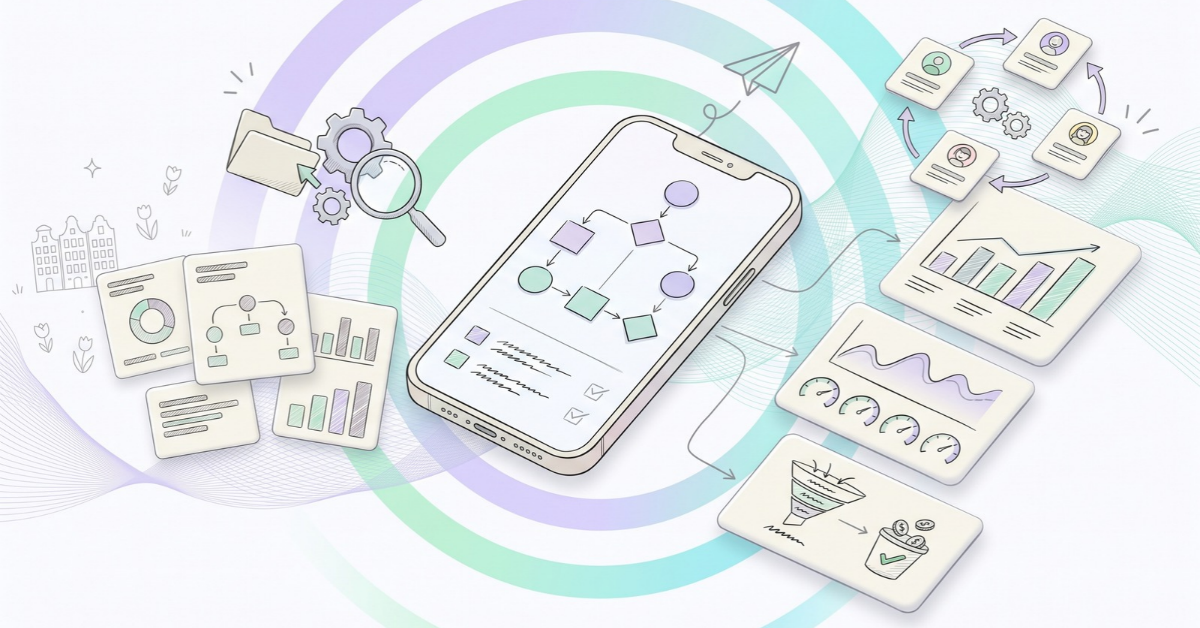
Performance-based marketing lets you advertise your app while paying only for actual results, such as installs, purchases, or specific user actions. Instead of paying upfront advertising costs with uncertain outcomes, you set clear performance targets and pay only when users complete those desired actions. This approach reduces financial risk and ensures your marketing budget directly correlates with measurable app growth.
Whether you’re looking to scale user acquisition or optimize conversion rates, performance-based advertising offers transparent, results-driven solutions that align your marketing spend with your business objectives.
What is performance-based marketing for mobile apps?
Performance-based marketing for mobile apps is an advertising model in which you pay only when specific, measurable actions occur, such as app installs, user registrations, or in-app purchases. Unlike traditional advertising, where you pay for impressions or clicks regardless of outcomes, performance-based marketing ties your costs directly to results.
This model works particularly well for mobile apps because it allows you to optimize for actions that directly impact business growth. You can set campaigns to pay per install (CPI), per acquisition (CPA), or based on return on ad spend (ROAS), ensuring every marketing dollar contributes to your app’s success. This approach eliminates guesswork and provides clear accountability for your advertising investments.
How does performance-based app advertising actually work?
Performance-based app advertising operates through a network of publishers and platforms that promote your app to their audiences, receiving payment only when predetermined actions are completed. You set specific performance targets, such as cost per install or cost per purchase, and advertisers bid to reach users most likely to complete those actions.
The process begins with defining your target actions and acceptable costs. Publishers then display your app ads across their networks, websites, or platforms. When users click through and complete your specified action, tracking systems verify the conversion and trigger payment to the publisher. Advanced attribution tools ensure accurate tracking across different touchpoints, preventing fraud and duplicate counting.
Real-time optimization algorithms continuously adjust targeting and bidding to maximize performance, automatically pausing underperforming placements and scaling successful ones. This creates a self-improving system that becomes more efficient over time.
What’s the difference between CPI, CPA, and ROAS models?
CPI (cost per install) charges you a fixed amount for each app installation. CPA (cost per acquisition) charges for specific user actions beyond installation, such as registrations or purchases. ROAS (return on ad spend) measures the revenue generated per advertising dollar spent rather than charging per action.
CPI works best when your primary goal is to grow your user base quickly. You pay a predetermined amount for each verified app install, making budget planning straightforward. This model suits apps with strong organic monetization or those building initial user momentum.
CPA goes deeper by charging only when users complete valuable actions within your app, such as making purchases, subscribing, or reaching specific engagement milestones. This model better aligns costs with actual business value but typically requires higher payouts to publishers because the conversion requirements are more stringent.
ROAS focuses on revenue efficiency rather than individual actions. Instead of paying per conversion, you evaluate campaigns based on how much revenue they generate compared to advertising spend. A 3:1 ROAS means every dollar spent generates three dollars in revenue, helping you optimize for profitability rather than just volume.
Which platforms offer performance-based app advertising?
Major platforms offering performance-based app advertising include Apple Search Ads, Google Ads, Meta (Facebook and Instagram), TikTok Ads, and specialized mobile advertising networks such as ironSource, Unity Ads, and Vungle. Each platform provides different targeting capabilities and performance metrics suited to various app categories.
Apple Search Ads excels for iOS apps with high-intent users actively searching the App Store. Google Ads offers extensive reach across Search, Display, and YouTube, with sophisticated audience targeting. Meta platforms provide detailed demographic and interest-based targeting with strong creative testing capabilities.
TikTok has emerged as particularly effective for apps targeting younger demographics, offering engaging video ad formats that drive high-quality installs. Specialized mobile networks often provide access to premium app placements and advanced fraud protection specifically designed for mobile advertising.
How do you set up tracking for performance-based app campaigns?
Setting up tracking for performance-based app campaigns requires implementing mobile measurement partners (MMPs) such as Adjust, AppsFlyer, or Branch to accurately attribute installs and post-install events to specific advertising sources. These platforms provide SDKs that integrate into your app and track user journeys from ad click to conversion.
Start by defining the specific events you want to track, such as app opens, registrations, purchases, or subscription activations. Configure your MMP to recognize these events and assign them monetary values when applicable. This creates a clear connection between advertising spend and business outcomes.
Implement deep linking to ensure users land on relevant app content after clicking ads, improving conversion rates and user experience. Set up postback URLs to send conversion data back to advertising platforms, enabling their algorithms to optimize for your specific performance goals. Regular testing ensures tracking accuracy and identifies any attribution gaps that could impact campaign optimization.
What metrics should you track in performance-based app marketing?
Track install rates, cost per acquisition, lifetime value (LTV), retention rates, and return on ad spend (ROAS) to measure the effectiveness of performance-based app marketing. These metrics provide comprehensive insights into both immediate campaign performance and long-term user value, enabling data-driven optimization decisions.
Install rates and cost per acquisition show immediate campaign efficiency, helping you identify which channels and creatives drive the most cost-effective user acquisition. However, these metrics tell only part of the story without considering user quality and long-term value.
Retention rates reveal user quality by showing how many users continue using your app after installation. Day 1, day 7, and day 30 retention rates help you understand which traffic sources deliver users who stick around. Lifetime value calculations combine retention data with monetization metrics to determine the total revenue each user generates.
ROAS ties everything together by comparing revenue generated with advertising costs, providing the clearest picture of campaign profitability. Monitor these metrics continuously and adjust your performance-based campaigns to focus on sources that deliver the highest long-term value, not just the cheapest installs.
Ready to implement performance-based marketing for your app? We specialize in creating transparent, results-driven campaigns that align your advertising spend with actual business growth. Our performance marketing services use advanced tracking and optimization to ensure you pay only for meaningful results that contribute to your app’s success.
Frequently Asked Questions
How long does it take to see results from performance-based app marketing campaigns?
You can typically see initial install data within 24-48 hours of launching campaigns, but meaningful performance insights require 7-14 days of data collection. For campaigns optimizing beyond installs (CPA or ROAS), allow 2-4 weeks to gather sufficient post-install event data for accurate optimization and scaling decisions.
What's the minimum budget needed to start performance-based app advertising?
Most platforms require a minimum daily budget of $50-100 to generate statistically significant data for optimization. However, for effective testing and scaling, budget at least $500-1000 per month per platform to allow algorithms sufficient data to optimize performance and identify winning ad variations.
How do I prevent fraud in performance-based app campaigns?
Use reputable mobile measurement partners (MMPs) with built-in fraud detection, enable click validation and install verification, and monitor for suspicious patterns like unusually high conversion rates or traffic from specific sources. Set up conversion windows (typically 1-7 days) and regularly audit your traffic sources to identify and block fraudulent publishers.
Should I focus on CPI, CPA, or ROAS when starting performance-based marketing?
Start with CPI campaigns to build initial user volume and gather data on user behavior patterns. Once you have sufficient data on user lifetime value and conversion rates (typically after 1000+ installs), transition to CPA or ROAS models that optimize for revenue-generating actions rather than just installs.
What are the most common mistakes in performance-based app marketing?
The biggest mistakes include optimizing for cheap installs instead of quality users, not implementing proper attribution tracking, setting unrealistic CPA targets without understanding user lifetime value, and pausing campaigns too early before algorithms have sufficient data to optimize effectively.
How do I calculate the right CPA target for my app?
Calculate your target CPA by determining user lifetime value (LTV) and applying a profit margin. For example, if your average user generates $30 LTV and you want a 50% profit margin, set your CPA target at $15. Factor in your app’s conversion funnel and typical retention rates to ensure sustainable profitability.
Can performance-based marketing work for apps with low monetization?
Yes, but focus on building user volume through CPI campaigns first, then optimize for engagement metrics like session length or feature usage rather than direct revenue. Consider indirect monetization strategies like ad revenue or freemium conversions, and use longer attribution windows to capture delayed monetization events.
Related Articles
- Why does my app link work on Android but not iOS?
- How do I audit my app's tracking and attribution setup?
- How does Branch handle app deep linking?
- How do I evaluate our current app tracking vendor?
- Why doesn't my ROAS match my actual revenue?
- 4 signs your finance team shouldn't trust your app data
- How do I know if an app campaign is actually profitable?
- How do you advertise an app using TikTok effectively?
- What is frequency capping and why does it matter in app advertising?
- What are custom product pages on iOS?

 EN
EN  NL
NL