
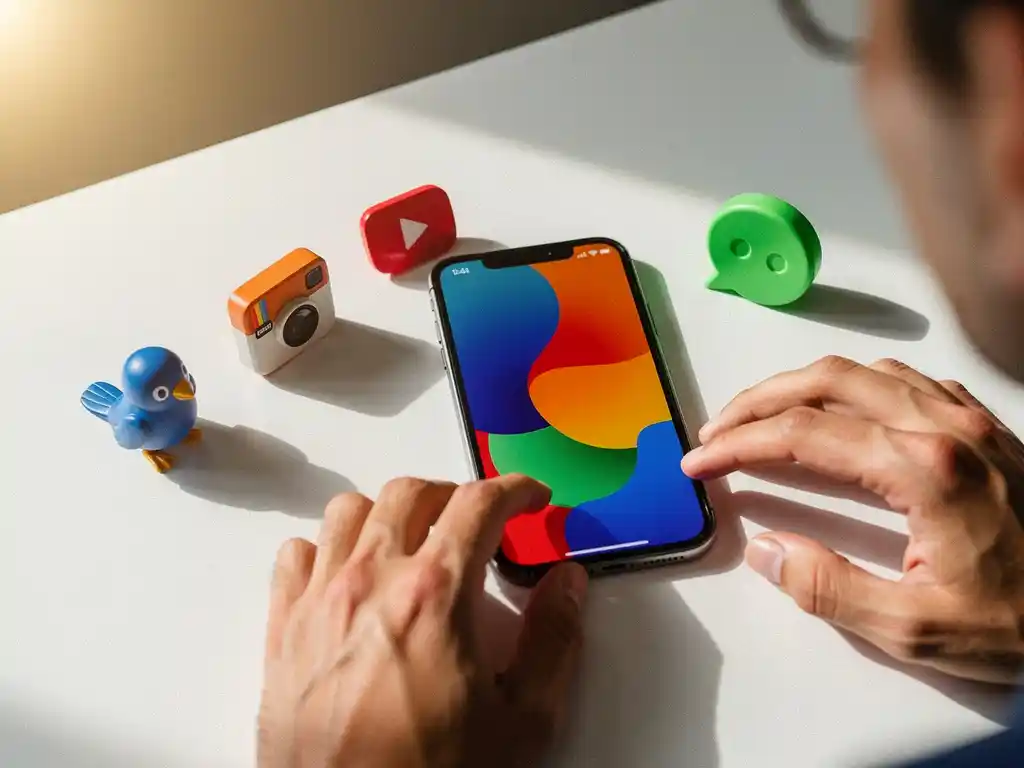
Advertising your app on social media platforms involves creating targeted campaigns on platforms like Meta (Facebook/Instagram), TikTok, X (formerly Twitter), and LinkedIn to drive app downloads and user engagement. The key is choosing the right platforms for your audience, creating compelling ad creatives that showcase your app’s value, and using platform-specific targeting options to reach users most likely to install and engage with your app.
Success in social media app advertising requires understanding each platform’s unique strengths, audience demographics, and ad formats, while maintaining consistent messaging that drives users to take action.
What are the best social media platforms for app advertising?
Meta (Facebook and Instagram), TikTok, X (formerly Twitter), and LinkedIn are top social media platforms for app advertising, each offering unique advantages depending on your target audience and app category. Meta dominates with the largest user base and sophisticated targeting options, while TikTok excels at reaching younger demographics with engaging video content.
Meta’s platforms provide extensive demographic and behavioral targeting capabilities, making them ideal for most app categories. The unified advertising system allows you to run campaigns across both Facebook and Instagram simultaneously, maximizing your reach. Instagram, in particular, excels for lifestyle, entertainment, and visual apps.
TikTok has emerged as a powerful platform for app promotion, especially for gaming, entertainment, and social apps targeting users under 35. The platform’s algorithm favors engaging content, and successful app ads often feel native to the user experience rather than like traditional advertisements.
X works well for news, productivity, and business apps, while LinkedIn is often the best choice for B2B apps, professional tools, and enterprise solutions. Consider your app’s primary user demographics when selecting platforms, as audience alignment directly impacts campaign performance.
How much does it cost to advertise an app on social media?
Social media app advertising costs typically range from $1 to $5 per app install, though prices vary significantly based on platform, target audience, competition, and app category. Meta platforms generally offer lower costs per install than TikTok, while LinkedIn commands premium prices for B2B targeting.
Several factors influence your advertising costs. Competitive app categories like gaming and finance typically see higher costs per install due to increased bidding competition. Geographic targeting also affects pricing, with developed markets like the US and Western Europe commanding higher prices than emerging markets.
Your ad quality and relevance scores directly impact costs. Platforms reward engaging, high-performing ads with lower prices and better placement. Apps with strong conversion rates from install to meaningful actions often achieve better cost efficiency over time.
Budget allocation should account for testing phases, during which initial costs may be higher as you optimize targeting and creative elements. Most successful campaigns start with modest daily budgets of $50 to $100 per platform to gather performance data before scaling investment.
What types of ad formats work best for mobile app promotion?
Video ads, particularly short-form vertical videos, deliver the highest engagement and conversion rates for mobile app promotion across social media platforms. These formats effectively demonstrate app functionality and user experience while matching native content consumption patterns on mobile devices.
Video ads should showcase your app in action, highlighting key features and benefits within the first 3 to 5 seconds. Screen recordings of actual app usage, combined with compelling voiceovers or text overlays, help users understand your app’s value proposition quickly. Keep videos between 15 and 30 seconds for optimal performance.
Carousel ads work exceptionally well for apps with multiple features or use cases. You can display different app screens, highlight various functionalities, or show before-and-after scenarios across multiple cards. This format allows for comprehensive storytelling while maintaining user engagement.
Single-image ads remain effective when designed specifically for mobile viewing. Use clear, high-contrast visuals that remain legible on small screens, and include compelling calls to action that create urgency. Interactive ad formats, where available, can significantly boost engagement by allowing users to experience app elements before installing.
How do you target the right audience for your app on social media?
Effective app audience targeting combines demographic data, behavioral patterns, and interest-based targeting to reach users most likely to install and actively use your app. Start by analyzing your existing user base to identify common characteristics, then use platform targeting tools to find similar audiences.
Demographic targeting should align with your app’s core user profile. Consider age ranges, geographic locations, device types, and income levels that match your ideal users. For example, productivity apps might target working professionals aged 25 to 45, while gaming apps might focus on younger demographics with specific gaming interests.
Behavioral targeting leverages user actions and engagement patterns. Target users who have recently downloaded similar apps, engaged with competitor content, or shown interest in your app category. Lookalike audiences based on your highest-value users often deliver strong results once you have sufficient install data.
Interest-based targeting allows you to reach users based on their social media activity, page likes, and content engagement. Combine broad interests with specific behaviors for optimal targeting precision. Regular audience testing and refinement based on performance data help improve targeting effectiveness over time.
What should your app advertising creative include to drive installs?
Effective app advertising creatives must clearly communicate your app’s core value proposition within the first few seconds while demonstrating actual functionality through screenshots or video demonstrations. Include a strong, action-oriented call to action that creates urgency and guides users toward installation.
Visual elements should showcase your app’s interface and key features authentically. Use actual app screenshots rather than generic stock imagery, and ensure all visual elements remain clear and readable on mobile devices. Highlight unique features that differentiate your app from competitors.
Copy should focus on benefits rather than features, addressing specific user pain points your app solves. Use clear, concise language that resonates with your target audience’s vocabulary and concerns. Include social proof elements like user ratings, download numbers, or testimonials when available.
Strong calls to action drive immediate action. Use phrases like “Download Now,” “Install Free,” or “Try Today” rather than generic terms. Consider platform-specific optimization, as what works on Instagram might need adjustment for TikTok or LinkedIn audiences.
How do you measure success in social media app advertising campaigns?
Success in social media app advertising is measured through a combination of acquisition metrics (installs, cost per install) and engagement metrics (retention rates, in-app actions, lifetime value) that indicate long-term user quality and campaign profitability. Focus on metrics that align with your app’s business objectives rather than vanity metrics alone.
Install volume and cost per install provide immediate campaign performance indicators. Track these metrics across different audiences, ad formats, and platforms to identify your most cost-effective acquisition channels. However, cheap installs mean nothing without user engagement and retention.
Post-install metrics reveal true campaign quality. Monitor day-1, day-7, and day-30 retention rates to understand user engagement patterns. Track key in-app events like account creation, first purchase, or feature usage that indicate meaningful user activation. These metrics help you optimize for user quality, not just quantity.
Return on ad spend (ROAS) and user lifetime value calculations determine campaign profitability. Calculate the average revenue generated per user over time and compare it to acquisition costs. We help companies implement comprehensive tracking systems that measure these advanced metrics across multiple platforms, ensuring you can optimize campaigns for long-term profitability rather than short-term install volume.
Frequently Asked Questions
How long should I run my app advertising campaign before making optimization decisions?
Run campaigns for at least 7-14 days before making major optimization decisions, as this allows platforms’ algorithms to stabilize and provides sufficient data for meaningful analysis. However, you can pause obviously underperforming ads within 24-48 hours if they show extremely poor metrics like zero installs or very high costs per install.
What's the biggest mistake new advertisers make when promoting their apps on social media?
The most common mistake is focusing solely on install volume rather than user quality, leading to campaigns that generate cheap installs from users who immediately delete the app. Always optimize for post-install engagement metrics like day-7 retention and meaningful in-app actions rather than just driving download numbers.
Should I advertise on multiple social media platforms simultaneously or focus on one at a time?
Start with one platform (typically Meta due to its large audience and robust targeting) to establish baseline performance and learn what messaging resonates with your audience. Once you achieve consistent results, expand to additional platforms while maintaining separate budgets and creative strategies tailored to each platform’s unique characteristics.
How do I create effective app store screenshots and videos for social media ads when I have limited design resources?
Use screen recording tools to capture actual app usage, then add simple text overlays highlighting key benefits using free tools like Canva or even built-in phone editing apps. Focus on showing real user workflows rather than polished graphics – authentic demonstrations often outperform expensive creative productions in social media environments.
What should I do if my app advertising campaigns have good install numbers but poor retention rates?
This indicates a mismatch between your ad messaging and actual app experience. Review your ad creatives to ensure they accurately represent your app’s functionality, adjust your targeting to focus on users more likely to engage long-term, and consider improving your app’s onboarding process to better deliver on the promises made in your ads.
How can I compete with bigger apps that have much larger advertising budgets?
Focus on highly specific niche targeting rather than broad audiences, create authentic user-generated content that feels less commercial, and leverage platform features like community engagement and organic sharing. Smaller budgets often perform better with precise targeting and genuine storytelling rather than trying to match large competitors’ spending volume.
When should I consider hiring a professional agency versus managing app advertising campaigns myself?
Consider professional help when you’re spending over $5,000 monthly on ads, managing campaigns across multiple platforms, or when your internal team lacks time for daily optimization and testing. Agencies become cost-effective when their expertise can improve your return on ad spend by more than their fees, typically around 10-20% of ad spend.
Related Articles
- Best MMP pricing compared for apps: AppsFlyer vs Adjust
- How do I know which ad channel is actually driving app installs?
- 4 reasons marketing and finance disagree on app ad numbers
- How do I know if our app measurement setup fits our company size?
- Why do I have too many dashboards for app marketing?
- What are the benefits of advertising your app on multiple platforms?
- How do you measure ROI when you advertise your app?
- Should startups advertise their app differently than enterprises?
- 10 expert tips to advertise your app on a tight budget
- How do you track the ROI of app store optimization?

 EN
EN  NL
NL