

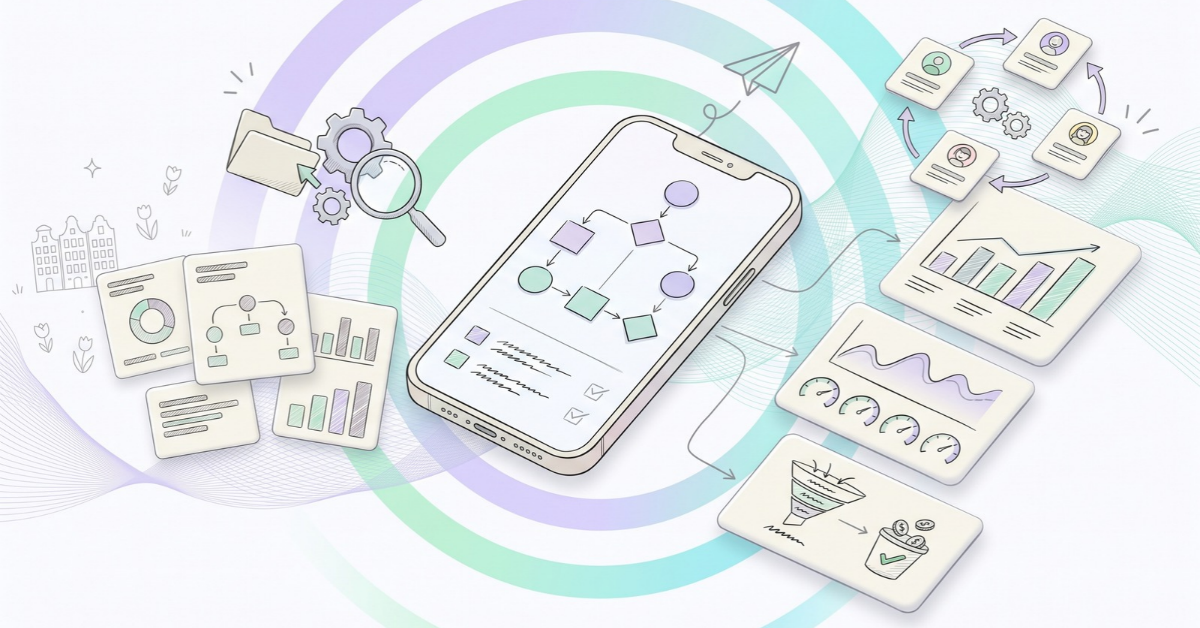
Deciding when to advertise your app is one of the most important strategic decisions you’ll make as an app developer or marketer. The timing of your advertising efforts can significantly impact your launch success, budget efficiency, and long-term growth trajectory. While there’s no one-size-fits-all answer, understanding the benefits and risks of pre-launch versus post-launch advertising will help you create a strategy that aligns with your goals, resources, and your app’s readiness.
The key is finding the right balance between building anticipation before launch and having enough data and optimization in place to make your advertising spend effective after launch.
What’s the Difference Between Pre-Launch and Post-Launch App Marketing?
Pre-launch app marketing focuses on building awareness and anticipation before your app becomes available for download, while post-launch marketing aims to drive downloads and engagement from users who can access your app immediately. Pre-launch efforts typically include teaser campaigns, beta-testing promotion, and building email lists of interested users.
Pre-launch marketing creates buzz and establishes your app’s presence in the market before it’s available. This approach works well for apps with strong brand recognition or innovative features that generate natural curiosity. You can use social media campaigns, content marketing, and influencer partnerships to build excitement without spending heavily on performance advertising.
Post-launch marketing, on the other hand, focuses on measurable results such as downloads, user acquisition costs, and retention rates. You have access to real user data, app store performance metrics, and conversion tracking that allow you to optimize your campaigns for maximum efficiency. This data-driven approach typically delivers more predictable returns on your advertising investment.
Should You Start App Store Optimization Before Launch?
Yes, you should absolutely start App Store Optimization before launch because it takes time for app stores to index your content and for your optimization efforts to show results. Starting ASO early gives your app the best chance of ranking well from day one and maximizes your organic visibility during the critical launch period.
App Store Optimization involves optimizing your app title, keywords, description, screenshots, and app icon before submission. This groundwork is essential because you can’t easily change many elements after launch without potentially losing ranking momentum. Research your target keywords, analyze competitor strategies, and create compelling visual assets well before your launch date.
The app stores also favor apps that show strong initial performance metrics. By having your ASO foundation in place, you’re more likely to achieve higher rankings when users start downloading your app, which creates a positive feedback loop that boosts your organic reach throughout the launch period.
How Much Should You Spend on Pre-Launch App Advertising?
Most successful app launches allocate 20-30% of their total marketing budget to pre-launch activities, focusing primarily on organic growth tactics rather than paid advertising. Pre-launch spending should emphasize low-cost, high-impact activities such as content creation, community building, and ASO rather than expensive performance advertising campaigns.
Your pre-launch budget should prioritize activities that build lasting value for your app. This includes creating high-quality app store assets, developing content marketing materials, building a social media presence, and potentially running small-scale beta-testing campaigns. These investments continue paying dividends long after launch.
Avoid spending heavily on performance advertising before launch because you lack the data needed to optimize campaigns effectively. Without conversion tracking, user behavior insights, and retention metrics, you’re essentially advertising blind, which often leads to a poor return on investment and wasted budget that could be better used post-launch.
What Are the Risks of Advertising Too Early?
Advertising too early can waste your budget on unoptimized campaigns, create negative first impressions if your app isn’t ready, and generate interest that fades before launch. The biggest risk is spending money to drive traffic to an app that users can’t download or experience, which frustrates potential users and wastes advertising spend.
Early advertising also means you’re making decisions without crucial data about user preferences, conversion rates, and app performance. This often leads to targeting the wrong audience, using ineffective creative assets, or bidding on keywords that don’t convert well for your specific app.
Another significant risk is creating unrealistic expectations through early advertising. If your pre-launch campaigns promise features or experiences that your app doesn’t deliver perfectly at launch, you’ll face negative reviews and poor retention rates that can damage your app’s long-term success in the competitive app marketplace.
How Do You Build Momentum for App Launch Day?
Build momentum for launch day by creating a multi-channel campaign that combines organic reach, community engagement, and strategic partnerships rather than relying solely on paid advertising. Start building your audience 6-8 weeks before launch through content marketing, social media engagement, and email list building.
Create valuable content that addresses your target users’ problems and positions your app as the solution. This might include blog posts, social media content, or video demonstrations that showcase your app’s unique features. Engage with relevant communities and forums where your potential users spend time, but focus on providing value rather than direct promotion.
Coordinate your launch day activities to maximize impact. This includes reaching out to your email list, posting across all social channels, engaging with app review sites, and potentially running targeted advertising campaigns. The goal is to create a concentrated burst of activity that signals to app stores that your app is gaining traction quickly.
When Should You Scale Your App Advertising Budget?
Scale your app advertising budget once you have at least 2-4 weeks of post-launch data showing positive unit economics, stable conversion rates, and acceptable user retention metrics. This data gives you the foundation needed to optimize campaigns and predict returns on increased advertising spend.
Look for key indicators before scaling: your cost per acquisition should be significantly lower than your user lifetime value, your app should maintain consistent star ratings above 4.0, and your retention rates should meet or exceed industry benchmarks for your app category. These metrics indicate your app is ready for increased user volume.
Start scaling gradually by increasing budgets for your best-performing campaigns by 20-30% weekly while monitoring performance closely. If you’re ready to take your app marketing to the next level with data-driven strategies and proven performance marketing techniques, we’d love to help you build a comprehensive growth plan that maximizes your advertising ROI. Our performance marketing approach focuses on sustainable growth and measurable results that align with your business objectives.
Frequently Asked Questions
What metrics should I track during the first month after launch to determine if I'm ready to increase my advertising spend?
Focus on tracking cost per acquisition (CPA), user lifetime value (LTV), day-1, day-7, and day-30 retention rates, and your app store rating. Your CPA should be at least 3x lower than your LTV, retention rates should meet industry benchmarks (typically 25% day-1, 10% day-7 for most categories), and maintain above 4.0 stars before scaling ad spend.
How do I avoid wasting money on pre-launch advertising while still building awareness?
Focus your pre-launch budget on organic growth tactics like content marketing, social media engagement, and ASO rather than paid ads. Limit paid advertising to small-scale beta testing campaigns or highly targeted brand awareness campaigns with clear tracking. Save 70-80% of your advertising budget for post-launch when you have conversion data to optimize campaigns.
What's the biggest mistake app developers make when timing their advertising campaigns?
The biggest mistake is launching expensive performance advertising campaigns immediately after app release without giving the app time to stabilize and gather user feedback. This often leads to advertising an app with bugs, poor user experience, or low ratings, resulting in wasted spend and negative brand perception that’s difficult to recover from.
How long should I wait after launch before starting major advertising campaigns?
Wait at least 2-4 weeks after launch to start major advertising campaigns. This gives you time to fix critical bugs, respond to user feedback, optimize your app store listing based on real user behavior, and gather enough data to identify your best-performing user acquisition channels and demographics.
Can I run advertising campaigns for my app if it's still in beta testing?
Yes, but limit beta advertising to small, targeted campaigns focused on recruiting quality testers rather than mass user acquisition. Use platforms like TestFlight ads, targeted social media campaigns to developer communities, or influencer partnerships. Keep budgets low (under $500-1000) and focus on gathering feedback rather than downloads.
What should I do if my app launch doesn't meet expectations despite following a pre-launch strategy?
First, analyze your app store metrics, user reviews, and retention data to identify specific issues. Pause major advertising spend and focus on addressing core problems like user experience, app store optimization, or feature gaps. Consider a soft relaunch strategy once you’ve made improvements, treating it as a fresh start with lessons learned from the initial launch.
How do I know if my app is ready for increased advertising investment?
Your app is ready for increased advertising when you have positive unit economics (LTV u003e 3x CPA), consistent 4+ star ratings, retention rates meeting industry standards, and at least one optimized user acquisition channel showing predictable returns. You should also have resolved major bugs and have systems in place to handle increased user volume.
Related Articles
- 5 reasons app users never reach their intended screen
- How do I set up deep linking in AppsFlyer for my app?
- Why doesn't my ROAS match my actual revenue?
- How do I calculate cost per paying app user?
- Can you advertise an app without using Google Ads?
- Why is it important to advertise your app consistently?
- 11 best practices to advertise your app and scale fast
- 10 expert tips to advertise your app on a tight budget
- When is the best time to ask users for an app review?
- 5 app store description templates for brand apps

 EN
EN  NL
NL