


When users click a link, tap an ad, or scan a QR code and end up in your app, that handoff moment is where a surprising amount of growth quietly disappears. The web-to-app transition involves multiple technical layers, and each one is a potential point of failure. Users disappear after install, land on the wrong screen after an ad click, or lose their context entirely, and most teams never see it happening. Here are four signs your web-to-app handoff is leaking users, and what you can do about it.
Where web-to-app traffic silently breaks down
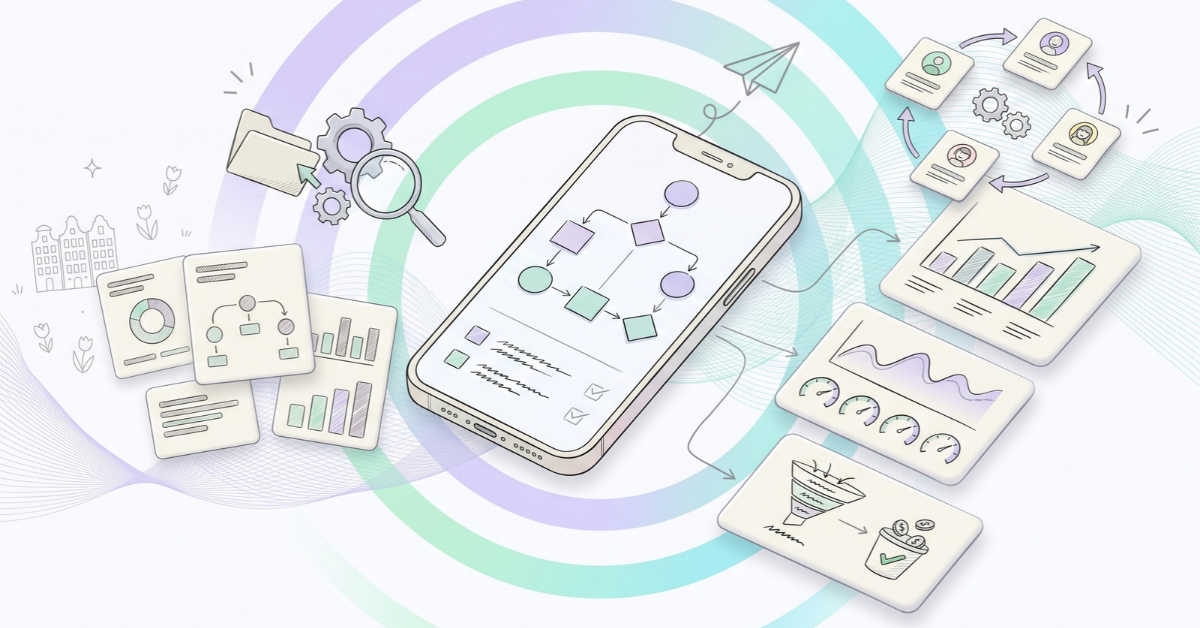
The web-to-app handoff sounds straightforward: a user clicks a link and opens your app. In practice, it involves deep linking logic, app store redirects, session data passing, and attribution tracking, all working in sequence. When any part of that sequence fails, users drop off without a trace. The frustrating part is that these failures rarely trigger an obvious error. Users simply don’t convert, don’t re-engage, or don’t return, and the root cause stays hidden inside your funnel.
Understanding where these breaks happen helps you fix them before they compound. The four signs below each point to a specific failure mode that is common across iOS and Android apps, regardless of vertical or traffic source.
1: Your deep links send users to the wrong place
If a retargeting ad opens the wrong page inside your app, or a promotional email drops users on your home screen instead of the relevant product, your deep linking setup has a problem. This is one of the most direct causes of lost users after install, and it is more common than most teams realise.
Deep links are supposed to carry destination context from the click through to the app. When they are misconfigured, that context is stripped away. A user who tapped a specific offer or product now has to navigate to it manually, and most won’t bother. The drop-off looks like low engagement, but the real cause is a broken link experience.
This issue often surfaces with deferred deep links, where the user doesn’t have the app installed yet. After the install, the app should open to the intended destination. If your deferred deep link logic isn’t correctly implemented using a tool like Branch deep linking, the post-install screen defaults to your app’s home, and the original intent is lost. For campaigns targeting new users, this is a significant source of app onboarding drop-off.
2: The app store redirect kills mid-funnel momentum
When a non-installed user clicks a link, they need to pass through the App Store or Google Play before reaching your app. That redirect is a necessary step, but it is also a momentum killer if it isn’t handled well. Users who were mid-funnel when they clicked, browsing a product, reading a promotion, or responding to a push notification, arrive at the app store with no context about why they’re there.
The problem compounds when the app store page itself doesn’t reinforce the message from the original touchpoint. If someone clicked an ad about a specific feature or offer and your app store listing shows a generic overview, the connection breaks. They may not install at all, or they install and don’t engage because the expected experience isn’t obvious.
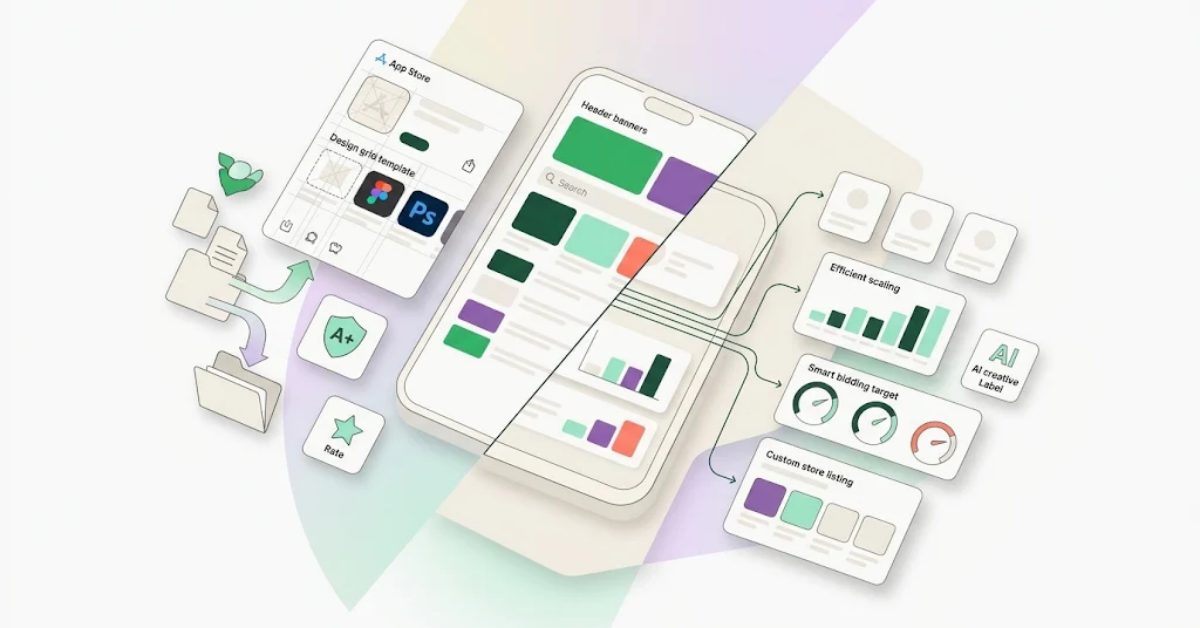
Reducing friction here means aligning your app store creative with your campaign messaging, and ensuring your deep link logic resumes the user journey correctly after install. Even a small improvement in this transition has a measurable impact on post-install activation rates.
3: What happens when session context isn’t preserved?
Session context refers to everything a user was doing or intending before they switched from web to app: a cart built on your mobile website, a search query, a form partially filled out, or a promotional code applied during browsing. When users open the app and find none of that context waiting for them, they experience a jarring reset.
Cart loss after reopening the app is one of the most cited frustrations in mobile commerce, and it directly causes re-engagement failure. If a user has to rebuild their cart or repeat their search inside the app, many won’t. They either abandon entirely or return to the mobile web, which undermines the whole point of driving users into the app.
Preserving session context requires passing state data through the deep link payload and having your app read and apply it on launch. This is technically achievable but often deprioritised during development. The result is an app that works well in isolation but creates a disconnected experience for users arriving from web or campaign touchpoints. Users don’t open the app again after an experience like this, which makes it a retention problem as much as an acquisition one.
4: Attribution gaps hide the true cost of leakage
Even if your deep links work and your session context is preserved, attribution gaps can make it impossible to understand where your handoff is actually failing. When your tracking doesn’t correctly connect the web click to the in-app event, you lose visibility into which campaigns are driving real outcomes and which are generating installs that never convert.
This matters because attribution gaps don’t just affect reporting. They affect decisions. If a paid campaign appears to drive installs but your mobile measurement partner isn’t capturing the downstream behaviour accurately, you may be scaling spend on traffic that leaks at the handoff point. The users disappear after install, but your dashboard shows a healthy install count.
Tools like Adjust, AppsFlyer, and Branch are built to close these gaps, but they require correct implementation of in-app event tracking to work accurately. Common issues include missing post-install events, misconfigured SDK integrations, and web-to-app attribution windows that don’t match actual user behaviour. Without accurate data at every step, you can’t distinguish a handoff problem from a product problem.
Fixing handoff leaks before they drain your growth
Addressing web-to-app handoff issues is a technical and strategic process. Start by auditing your deep link configuration across every major traffic source: paid ads, email, push notifications, and organic channels. Test each flow end-to-end, including the deferred deep link path for new users, to confirm that destinations and context are preserved correctly.
Next, review your attribution setup to confirm that your mobile measurement partner is capturing the full user journey from click to conversion. If you’re using Branch deep linking or a similar tool, verify that your SDK is sending the right events and that your attribution windows reflect realistic user behaviour for your category.
Finally, align your campaign creatives and app store assets so that users moving through the funnel experience a consistent message at every touchpoint. This reduces the cognitive friction that causes users to disengage mid-funnel.
At Wuzzon, our app growth stack services are built around exactly these challenges, connecting ASO, user acquisition, and technical tracking into a single, coherent growth system. If you’re seeing drop-off after install and aren’t sure where the leak is, talk to one of our specialists and we’ll help you find it.
Frequently Asked Questions
How do I know if my deferred deep links are actually working for new users?
The most reliable way to test deferred deep links is to simulate a fresh install: uninstall the app from a test device, click a campaign link, go through the App Store or Google Play install flow, and verify that the app opens to the correct destination with the expected context intact. Do this across both iOS and Android, since the underlying mechanisms (Apple’s Universal Links vs. Android App Links) behave differently. Tools like Branch, Adjust, and AppsFlyer all offer testing environments and link validation features that can help you catch failures before they reach real users.
What's the most common mistake teams make when setting up deep linking for paid campaigns?
The most frequent mistake is configuring deep links for direct opens (users who already have the app installed) but neglecting the deferred deep link path for new users. Teams test the link on a device where the app is already installed, it works, and they assume the setup is complete. In reality, new users hitting the same link go through the app store, and if the deferred logic isn’t correctly implemented, they land on the home screen with no connection to the original campaign. Always test both paths explicitly before launching any paid acquisition campaign.
How can I pass session context like a cart or promo code through a deep link without it breaking?
Session context is passed as parameters within the deep link payload, and your app needs to be built to read and apply those parameters on launch. For example, a promo code can be appended as a URL parameter, and your app’s launch logic should check for it and apply it automatically before the user reaches the relevant screen. The key is ensuring your app handles this gracefully even when parameters are missing or malformed, so users who arrive without context don’t encounter errors. Work closely with your mobile development team to define which parameters matter most for your conversion flow and prioritise those first.
Which mobile measurement partner (MMP) should I use, and does it matter which one I choose?
The major MMPs — Adjust, AppsFlyer, and Branch — are all capable of closing web-to-app attribution gaps when implemented correctly, so the choice matters less than the quality of your implementation. What does matter is ensuring your SDK is correctly integrated, your in-app events are mapped to meaningful conversion milestones, and your attribution windows are calibrated to match realistic user behaviour in your category. If you’re already using one of these tools but still seeing attribution gaps, the issue is almost always in the event configuration or SDK setup rather than the platform itself.
How much of an impact can fixing the web-to-app handoff realistically have on my conversion rates?
The impact varies by app and traffic source, but teams that fix deep link misconfiguration and session context loss often see meaningful improvements in post-install activation rates — sometimes in the range of 15–30%, depending on how broken the original flow was. The gains are typically most visible in retargeting campaigns and email re-engagement flows, where users arrive with specific intent that was previously being lost at the handoff. Even incremental improvements compound over time, particularly for paid acquisition where every lost user represents wasted spend.
Do these web-to-app handoff issues affect organic traffic as well, or is it mainly a paid campaign problem?
These issues affect every traffic source that involves a web-to-app transition, including organic search, social media bio links, QR codes, and SMS campaigns. Organic users who click a link from a blog post or Google search result and end up on your app’s home screen instead of the relevant content face the same drop-off risk as paid users. In some ways, organic traffic makes the problem more costly because those users arrived with high intent and no acquisition spend behind them. A comprehensive deep link audit should cover all traffic sources, not just paid channels.
Where should I start if I want to fix my web-to-app handoff but have limited development resources?
Start with an audit rather than a rebuild. Map out every entry point into your app — paid ads, email links, push notifications, QR codes, social links — and manually test each one end-to-end, including the new-user deferred path. Identify which flows are broken and rank them by traffic volume and revenue impact. This gives you a prioritised fix list that your development team can work through systematically, rather than trying to overhaul everything at once. Addressing your highest-traffic paid campaign flows first will typically deliver the fastest measurable return.
Related Articles
- Why does my app link work on Android but not iOS?
- 5 reasons you can't trust your app analytics dashboard
- 4 signs your app ad reporting is too manual
- How do I switch MMP providers safely for my app?
- How much does it cost to advertise your app effectively?
- What is the role of a mobile measurement partner in app advertising?
- 9 creative ad formats to advertise your app and stand out
- Can small businesses effectively advertise their mobile app?
- How do you write an app store description that converts?
- 5 app icon design principles for higher conversion rates

 EN
 NL
