

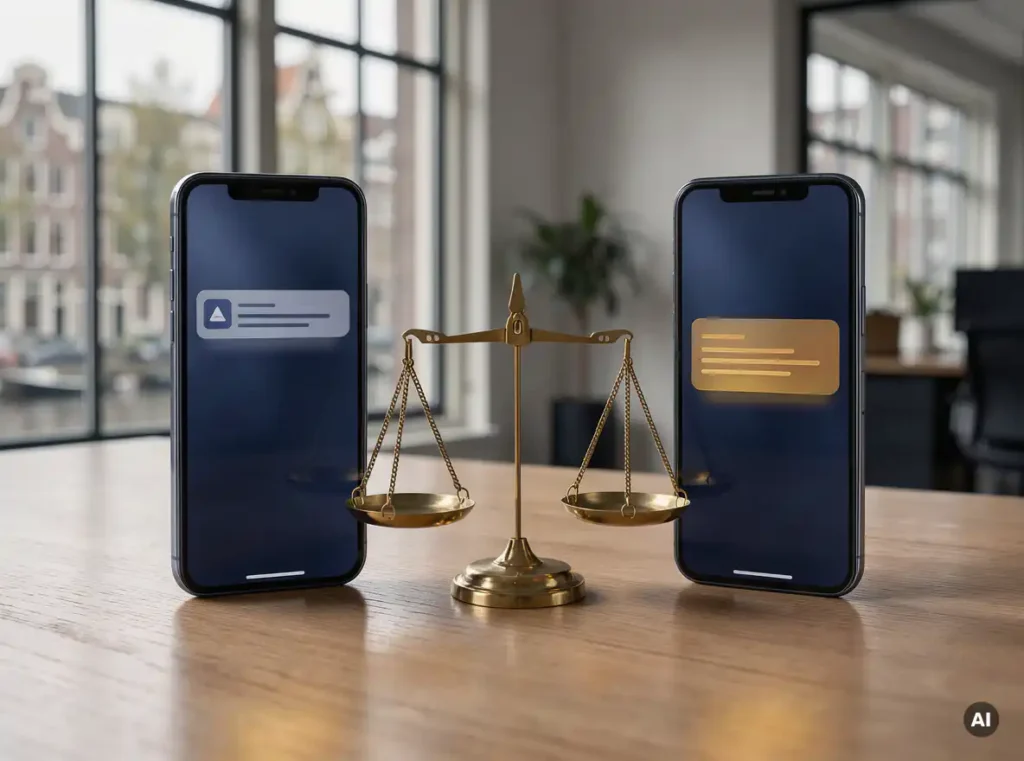
How do Braze and OneSignal differ in practice?
Braze is a full customer engagement platform built for orchestrating cross-channel journeys, while OneSignal is a push notification platform that has grown into a lighter messaging suite. Braze covers push, email, in-app messaging, SMS, and content cards in one system. OneSignal started with push and still shines there.
In daily use, the difference shows in setup and ownership. Braze rewards teams with data engineers, CRM managers, and a clear lifecycle strategy. It takes longer to implement, but it gives you a lot of control once it runs. OneSignal gets you sending messages quickly, often within days, with a simpler interface that a small marketing team can manage alone.
Think of it this way: Braze works as a mobile CRM hub, and OneSignal works as a sharp, fast messaging tool. Neither is “better” in the abstract. They solve different levels of the same problem.
Which platform has stronger segmentation and journey orchestration?
Braze has stronger segmentation and journey orchestration. Its Canvas journey builder supports multi-step, branching flows across channels, and its segmentation draws on behavioral events, custom attributes, and predictive tools. OneSignal offers solid segmentation and journey features, but they are simpler and better suited to straightforward campaigns.
With Braze, you can build a flow such as this: a user installs the app, skips onboarding, receives a push after a day, then gets an email if they still do not return, and enters a different path once they complete a key event. You can test variants at each step and trigger messages in real time based on in-app behavior.
OneSignal lets you segment by user properties, activity, and tags, and it supports automated journeys for common scenarios like welcome flows and re-engagement. For many apps, that is enough. If you need dozens of parallel journeys, complex audience logic, or deep personalization, you will hit its limits sooner.
How do Braze and OneSignal pricing models compare?
OneSignal pricing is generally more accessible, with a free tier and paid plans that scale with usage, while Braze pricing is custom, contract-based, and aimed at larger budgets. Braze typically prices based on monthly active users, channels, and data volume, so costs rise as your user base and feature needs grow.
Exact numbers change often, so check current pricing with each vendor before you decide. What matters more is the shape of the cost:
- OneSignal: low barrier to entry, transparent plans, and a free option that lets you test before committing.
- Braze: quote-based pricing, annual contracts, and added costs for extra channels, data, and support.
Also factor in the hidden costs. Braze often requires more implementation time and internal resources. OneSignal costs less to run, but you may need extra tools later if your lifecycle program outgrows it. If you are comparing Braze alternatives, total cost of ownership tells you more than the sticker price.
How well do they integrate with attribution and analytics tools?
Both platforms integrate with major attribution and analytics tools, but Braze offers deeper, more flexible data connections. Braze connects with mobile measurement partners such as Adjust, AppsFlyer, and Branch, plus data warehouses and customer data platforms. OneSignal supports key integrations too, though with a narrower and less customizable range.
This matters because lifecycle marketing only works when your data is accurate. If your attribution setup misses in-app events, your segments will rest on bad inputs. You want install source, campaign, and key events like registration, first purchase, or subscription flowing into your messaging platform, so you can target users based on how they arrived and what they did.
Before choosing, map the events you need to track and confirm each platform can receive and act on them. A clean event structure often matters more than the platform itself. Messy tracking turns even the best tool into an expensive way to send generic notifications.
Which is the better fit for enterprise or VC-backed apps?
Braze is usually the better fit for enterprise apps and VC-backed apps that treat lifecycle marketing as a growth engine. OneSignal fits earlier-stage apps, smaller teams, and companies that want to prove value before investing in a heavier stack. Your stage and complexity should guide the choice.
When Braze makes sense
Choose Braze if you run multiple channels, serve large and varied audiences, and have the team to manage a sophisticated setup. Large enterprises in fintech, e-commerce, and mobility often need governance, scalability, and dedicated support. VC-backed apps with a growth mandate benefit when retention and lifetime value drive the business model.
When OneSignal makes sense
Choose OneSignal if you want to launch fast, keep costs predictable, and focus mostly on push and in-app messaging. It works well for apps still finding product-market fit, or for teams without dedicated CRM resources. You can always migrate later as your needs grow, though planning for that move early saves effort.
Does the messaging platform alone drive app retention?
No, a messaging platform alone does not drive app retention. Braze and OneSignal deliver messages, but retention depends on product experience, onboarding, accurate event tracking, and the quality of your lifecycle strategy. The tool amplifies a good strategy, but it cannot fix a weak one.
If users do not reach the first valuable moment in your app, no push notification will bring them back for long. The strongest retention programs combine several things:
- A smooth onboarding flow that leads users to a clear first win.
- Correct in-app event tracking through your attribution tool.
- Relevant, well-timed messages instead of frequent generic ones.
- Continuous testing of timing, channel, and content.
- Acquisition that brings in users likely to stay.
That last point gets overlooked. Retention starts before the install, because the quality of your user acquisition shapes who enters your lifecycle flows. If you want help connecting these pieces, our app growth stack approach brings acquisition, tracking, and retention together. You can also talk to a specialist to review your current setup.
Conclusion
Braze wins on orchestration, segmentation, and enterprise scale, while OneSignal wins on speed, simplicity, and cost. Pick the platform that matches your team and your stage, not the one with the longest feature list. At Wuzzon, we focus solely on apps, and we help you choose, set up, and connect your messaging platform with attribution, acquisition, and retention so your lifecycle marketing delivers real growth.
Frequently Asked Questions
How do I get started if I'm choosing between Braze and OneSignal for the first time?
Start by documenting your must-have use cases: which channels you need (push, email, SMS, in-app), how many journeys you plan to run, and what events you can reliably track. Then run a short proof of concept, since OneSignal’s free tier lets you test quickly and Braze typically offers a guided demo or sandbox through its sales team. Compare how long setup takes, how well each tool handles your top three use cases, and what your team can realistically maintain.
What if I start with OneSignal and outgrow it later? How hard is migrating to Braze?
Migration is very doable, but it takes planning. You’ll need to export user profiles, tags, and subscription data, re-implement the SDK, and rebuild your campaigns and journeys in the new platform. To make it smoother, keep a clean, documented event and attribute naming structure from day one, and plan for a short period where both platforms run in parallel so you don’t lose push subscribers.
What are the most common mistakes teams make when implementing a messaging platform?
The biggest mistakes are tracking too few or inconsistently named events, launching without a clear lifecycle strategy, and over-messaging users with generic notifications. Another frequent issue is failing to connect attribution data, so segments ignore install source and campaign. Before launch, define an event taxonomy, test that events arrive correctly, and start with two or three high-impact flows such as onboarding and re-engagement.
How do I know if my team is ready for Braze?
You’re likely ready if you have a dedicated CRM or lifecycle owner, engineering support for SDK and data integrations, and a roadmap with multiple channels and complex journeys. If one marketer is handling everything and you mostly send push notifications, Braze may be more than you can use. A good test is whether you can name at least five distinct lifecycle journeys you’d build in the first six months.
How can I make sure my attribution data flows correctly into Braze or OneSignal?
Map the events you need first, such as registration, first purchase, and subscription, and confirm your mobile measurement partner (Adjust, AppsFlyer, Branch) can pass them to your messaging platform. Then test with a sample install end to end, checking that install source, campaign, and key events appear on the user profile. Re-run these checks after every app release, since SDK updates often break event tracking silently.
How should I measure whether my push and lifecycle messaging is actually working?
Look beyond open and click rates and focus on downstream outcomes like retention at day 1, 7, and 30, conversion to key events, and revenue per user. Use holdout groups, where a small share of users receive no message, to measure true incremental impact. Test timing, channel, and content continuously, and compare cohorts by acquisition source to see which users respond best.
Can I use both Braze and OneSignal, or other tools alongside them?
Yes, some teams use OneSignal for simple push while keeping a separate email or SMS tool, and larger teams pair Braze with a customer data platform or data warehouse. The key risk is fragmented data and duplicate messaging, so decide on one source of truth for user profiles and set frequency caps across tools. If you’re unsure how to structure the stack, a specialist review can help avoid overlap and wasted spend.
Related Articles
- How do I optimize my app paywall to increase subscription revenue?
- 5 reasons you can't trust your app analytics dashboard
- 5 signs you need one view of your app's ad performance
- 6 ways to tell your app attribution setup is broken
- How do you advertise an app without compromising user privacy?
- 7 best platforms to advertise your app for maximum ROI
- How does SKAdNetwork affect the way you advertise your app?
- How do you advertise an app in the Dutch market?
- How do you advertise an app on social media platforms?
- What is promotional text on iOS and how does it work?
 EN
 NL
