
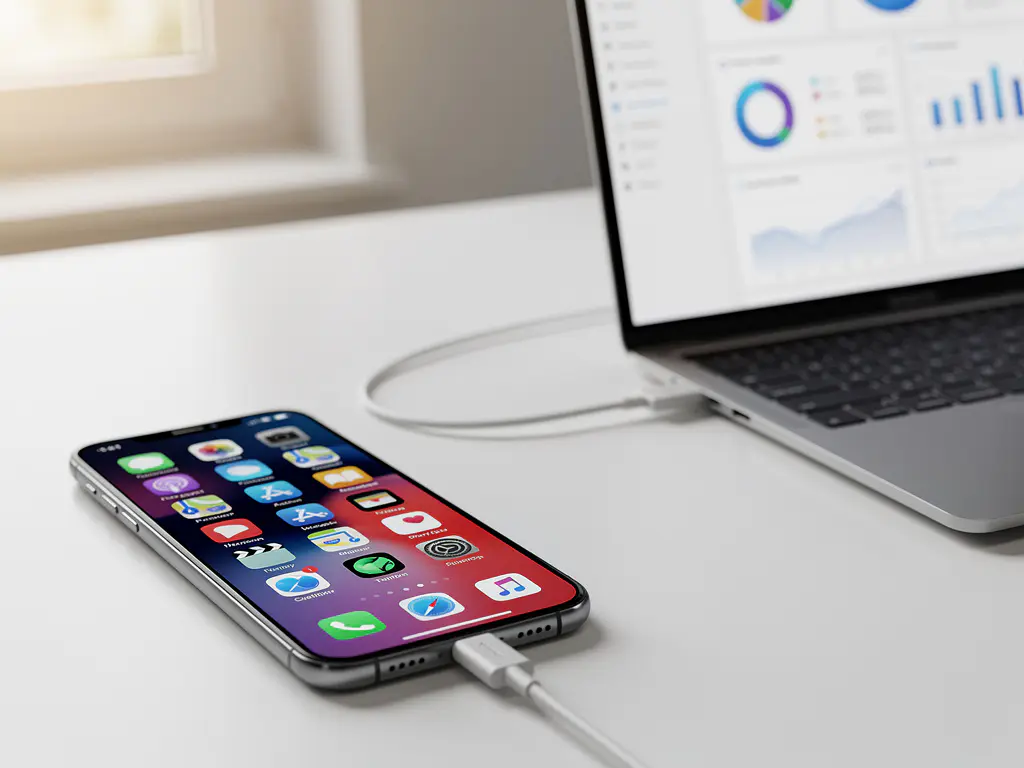
A mobile measurement partner (MMP) is a third-party analytics platform that tracks and attributes app installs, user actions, and campaign performance across multiple advertising channels. When you advertise your app, MMPs help you understand which campaigns drive real users and measure the return on your advertising spend with accurate, unbiased data.
For app marketers running campaigns across Apple Search Ads, Google, Meta, TikTok, and other platforms, MMPs provide the unified tracking and attribution needed to optimize advertising budgets and scale effectively.
What is a mobile measurement partner, and why do apps need one?
A mobile measurement partner is an independent analytics service that tracks user acquisition, measures campaign performance, and attributes app installs to their original marketing sources. MMPs act as neutral intermediaries between your app and advertising platforms, providing unbiased measurement that no single ad network can offer.
Apps need MMPs because advertising platforms like Google and Meta only show data from their own campaigns. Without an MMP, you can’t compare performance across different channels or understand your complete user acquisition funnel. This creates blind spots that waste your advertising budget and limit your ability to scale successful campaigns.
MMPs solve this by collecting data from all your marketing channels and presenting it in unified dashboards. They also provide fraud protection, ensuring the installs you pay for come from real users rather than bots or fraudulent sources.
How do mobile measurement partners track app installs and user behavior?
Mobile measurement partners track app installs using device fingerprinting, probabilistic matching, and SDK integration to connect advertising clicks with actual app downloads. They monitor user behavior through in-app event tracking that captures actions like purchases, registrations, and feature usage after installation.
The tracking process starts when users see your ads. MMPs record impression and click data from advertising platforms, creating unique identifiers for each interaction. When someone installs your app, the MMP SDK embedded in your application sends an install confirmation back to the platform.
For user behavior tracking, MMPs capture custom events you define as important for your business. These might include tutorial completion, a first purchase, or subscription signup. The MMP then connects these post-install events back to the original advertising source, showing you which campaigns drive the most valuable users.
What’s the difference between first-party and third-party app measurement?
First-party measurement uses data collected directly by advertising platforms about their own campaigns, while third-party measurement relies on independent MMPs to track performance across all marketing channels. First-party data is limited to single platforms, whereas third-party measurement provides cross-channel attribution and unbiased reporting.
First-party measurement from platforms like Google or Meta only shows performance within their ecosystems. While this data is accurate for individual campaigns, it doesn’t help you understand how different channels work together or compare performance across platforms. Each platform also has incentives to present its data favorably.
Third-party MMPs provide neutral measurement that treats all advertising channels equally. They can track user journeys that span multiple touchpoints, showing you if someone saw a Facebook ad, clicked a Google ad, and then installed your app. This complete attribution picture helps you allocate budget more effectively across channels.
Which mobile measurement partners should app marketers consider?
Leading mobile measurement partners include AppsFlyer, Adjust, and Branch, each offering comprehensive attribution, fraud prevention, and analytics capabilities. The choice depends on your specific needs for integration complexity, pricing structure, and advanced features like deep linking or audience segmentation.
AppsFlyer is the largest MMP, with extensive integrations and robust fraud protection. It works well for apps with complex attribution needs and large advertising budgets. Adjust offers strong privacy compliance features and detailed cohort analysis, making it popular with apps focused on user retention metrics.
Branch specializes in deep linking alongside attribution, which is valuable if you run campaigns that direct users to specific in-app content. Smaller MMPs like Kochava and Singular offer competitive pricing for apps with simpler tracking requirements. Consider factors like integration ease, cost structure, and the specific advertising platforms you use most frequently.
How do mobile measurement partners help optimize app advertising campaigns?
Mobile measurement partners optimize app advertising campaigns by providing unified performance data, identifying your best-performing audiences and creative assets, and enabling automated bid adjustments based on post-install user value. This data-driven approach helps you increase return on ad spend and scale winning campaigns across multiple platforms.
MMPs show you which campaigns drive users who actually engage with your app beyond just installing it. Instead of optimizing for installs alone, you can focus your budget on campaigns that deliver users who make purchases, complete onboarding, or take other valuable actions. This shift from volume to quality dramatically improves campaign efficiency.
Advanced MMP features include cohort analysis to understand user lifetime value by acquisition source, fraud detection to protect your budget from fake installs, and audience insights that help you refine targeting across platforms. Many MMPs also offer automation tools that pause underperforming campaigns or increase bids for high-value user segments. At Wuzzon, we use platforms like Adjust, AppsFlyer, and Branch to set up comprehensive tracking that captures the right in-app events for our clients. Our performance marketing approach combines MMP data with our expertise across Apple Search Ads, Google, Meta, and TikTok to optimize campaigns for sustainable app growth.
Frequently Asked Questions
How much does implementing a mobile measurement partner typically cost?
MMP pricing varies significantly based on your app’s scale and features needed. Most MMPs charge based on attributed installs, ranging from $0.03-$0.10 per install, with minimum monthly fees of $300-$1,000. Enterprise plans with advanced features like fraud protection and custom reporting can cost $2,000+ monthly, but the ROI from improved campaign optimization typically justifies the investment.
How long does it take to set up an MMP and start seeing actionable data?
Basic MMP setup typically takes 1-2 weeks, including SDK integration, event mapping, and partner integrations. You’ll see install attribution data within 24-48 hours of going live, but meaningful optimization insights require 2-4 weeks of data collection to identify performance patterns. Complex setups with custom events and multiple ad networks may take 3-4 weeks to fully implement.
Can I switch between different MMPs without losing historical data?
Yes, but the process requires careful planning to maintain data continuity. Most MMPs offer data export capabilities and migration support, though historical data formats may not perfectly align between platforms. Plan for a 2-4 week overlap period where both MMPs run simultaneously to ensure accurate attribution during the transition, and expect some data reconciliation work afterward.
What happens to my MMP tracking with iOS privacy changes like ATT?
iOS privacy changes significantly impact MMP accuracy, reducing attribution rates by 15-40% depending on your app category and user base. MMPs have adapted by improving probabilistic modeling, implementing SKAdNetwork integration, and developing privacy-compliant tracking methods. While precision decreases, MMPs still provide the best available cross-platform attribution in the post-ATT landscape.
Should I use multiple MMPs or stick with one platform?
Most apps should use a single MMP to avoid data fragmentation and attribution conflicts that can skew campaign optimization. Using multiple MMPs simultaneously can create discrepancies in reporting and make it difficult to get a unified view of performance. The exception is during migration periods or when testing different platforms before making a long-term commitment.
How do I know if my MMP is accurately tracking campaign performance?
Validate MMP accuracy by comparing install volumes with app store data, checking that attribution windows align with your user behavior patterns, and monitoring for unusual spikes that might indicate fraud or tracking issues. Set up regular reconciliation reports between your MMP and ad platforms, and use postback testing to ensure data flows correctly between systems.
What are the most common mistakes when implementing an MMP?
Common MMP implementation mistakes include not defining clear conversion events before setup, using attribution windows that don’t match user behavior, and failing to implement proper fraud protection settings. Many apps also make the mistake of not training their team on the platform’s features or not setting up automated alerts for campaign performance changes, leading to missed optimization opportunities.
Related Articles
- What is deferred deep linking for apps on iOS?
- 6 ways to tell your app attribution setup is broken
- Why does my app ad open the wrong screen in-app?
- How do I know if our app measurement setup fits our company size?
- 5 reasons switching app tools feels riskier than staying
- How do you advertise an app in competitive markets?
- 7 best platforms to advertise your app for maximum ROI
- How do you measure ROI when you advertise your app?
- How does A/B testing improve the way you advertise your app?
- 5 templates for responding to negative app store reviews




 EN
EN  NL
NL