

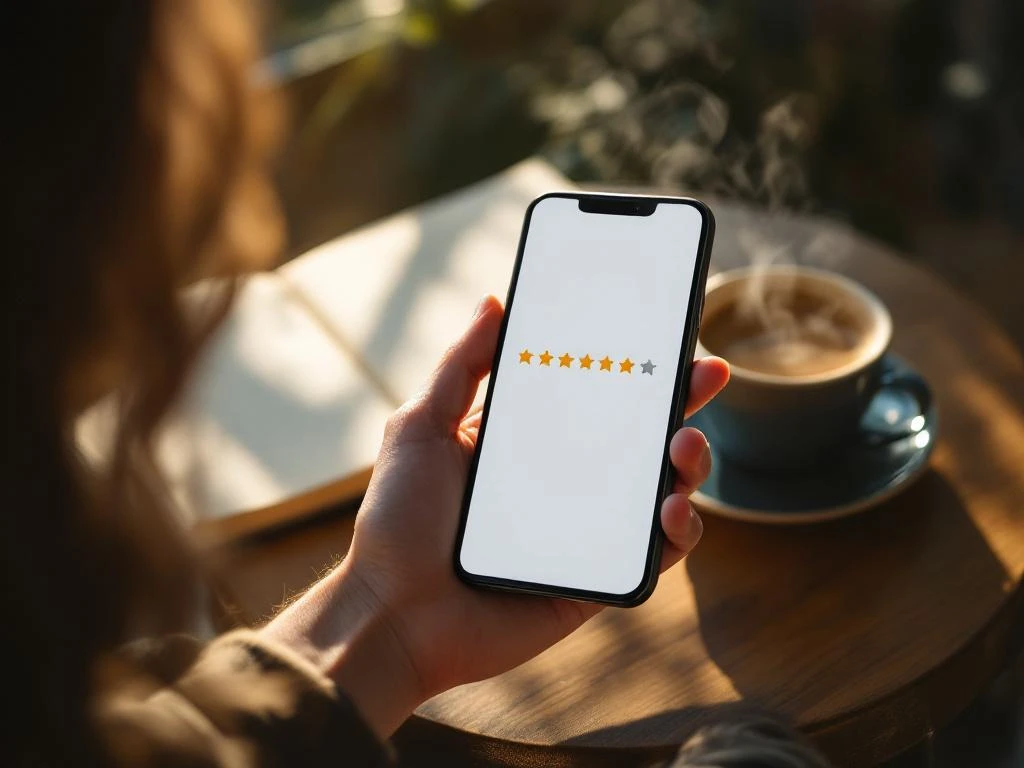
The best time to ask users for an app review is after they’ve experienced a clear satisfaction moment — a completed task, a reached milestone, or a feature that delivered real value. App review request timing isn’t one-size-fits-all: the right moment depends on your app category, the user’s behavior stage, and platform rules that limit how often you can prompt. This guide covers all of it.
Poor timing carries real costs. A prompt shown at the wrong moment can irritate users, produce lower ratings, and waste one of the three annual iOS prompt opportunities you’re allowed. App developers, product managers, and ASO specialists will find concrete, implementable strategies here — from behavioral readiness signals and category-specific timing to platform policies and what to do when users simply don’t respond.
What makes users actually want to leave app reviews?
Users leave app reviews when they feel emotionally connected to your app, either through exceptional satisfaction or frustration. Positive emotional triggers like completing a goal, solving a problem, or experiencing unexpected delight motivate users to share their success with others.
The strongest motivation comes from moments when your app delivers genuine value. This happens when users accomplish something important to them, whether that’s booking a perfect holiday, completing a fitness goal, or successfully managing their finances. Users want to celebrate these wins and often associate their success with the tool that helped them achieve it.
Recognition also plays a powerful role in review motivation. When users feel acknowledged for their achievements or progress within your app, they’re more likely to reciprocate with positive feedback. This creates a natural exchange where users appreciate being valued and respond by sharing their positive experience.
Social proof drives many review decisions too. Users who see that their opinion matters and could help others make informed decisions are more willing to contribute. They understand that their review becomes part of a community helping others discover useful apps.
Behavioral Signals That Show a User Is Ready to Review
Emotional triggers explain why users review — but to act on that insight, you need trackable events that tell you when a specific user has reached that state. The following behavioral signals are strong indicators of review readiness and can be mapped directly to analytics events in your app:
- Returns on 3 or more separate days within a 7-day window: Repeated voluntary return indicates the app has become part of the user’s routine, meaning they have enough experience to rate it accurately and positively.
- Completes a core task for the second or third time: Repetition signals both competence and satisfaction — the user has moved past the learning curve and is getting consistent value.
- Shares content or results generated by the app: Sharing is a strong signal of pride and social motivation, suggesting the user is confident enough in the app’s output to attach their name to it.
- Spends significantly more time in a session than their own average: Deep engagement above the user’s personal baseline indicates they are absorbed in the experience rather than completing a routine task.
- Voluntarily explores features beyond the core use case: Curiosity-driven exploration suggests the user is satisfied with the basics and actively looking for more value — a strong indicator of overall positive sentiment.
- Completes a task after previously failing or abandoning it: Recovery moments carry high emotional charge. Successfully overcoming a previous obstacle creates a strong positive association with the app.
- Upgrades from free to paid or renews a subscription: A financial commitment is one of the clearest signals of perceived value and is an ideal moment to ask for a review prompt.
These user engagement signals for review requests map directly to the timing strategies covered in the sections below. Identifying which of these behavioral triggers apply to your app category is the first step toward building a structured, data-driven review prompt strategy.
How long should you wait before asking new users for a review?
Wait at least 3–7 days after a user’s first download before requesting a review, but more importantly, wait until they’ve completed your onboarding process and used at least one core feature successfully. Value realization matters more than time elapsed when determining the right moment for your first review request.
New users need time to understand your app’s value proposition and experience its benefits before they can provide meaningful feedback. Asking too early results in reviews based on first impressions rather than actual utility, which often leads to lower ratings or generic feedback that doesn’t help other users.
Track user engagement milestones rather than just time. Look for indicators like completing the setup process, using the app for three separate sessions, or successfully finishing their first important task. These behavioral signals show that users have moved beyond the initial exploration phase and started integrating your app into their routine.
Different apps require different waiting periods based on their complexity and usage patterns. Simple utility apps might be ready for review requests after 2–3 successful uses, while complex productivity apps might need 1–2 weeks of regular usage before users can properly evaluate their experience.
What Do Apple and Google Allow When Asking for Reviews?
Understanding platform policies is not optional for developers building a review strategy. Both Apple and Google impose rules on how, when, and how often you can ask users for a review — and violating those rules can result in app rejection or removal. The timing strategies in this article only deliver results if they operate within these boundaries.
Both platforms share a core principle: review prompts must feel native and non-coercive. Custom-designed prompts that pressure users, redirect them to the App Store with misleading messaging, or offer incentives for positive reviews are prohibited on both platforms. The good news is that working within these constraints actually reinforces good timing practice — the platforms are designed to reward genuine satisfaction moments, not aggressive solicitation.
iOS Review Prompt Rules
Apple requires all review requests to go through the native SKStoreReviewController API. Custom prompts that redirect users to the App Store to leave a review — through buttons, banners, or any other UI element — violate App Store Review Guidelines section 1.1.7 and can result in your app being rejected during review or removed from the store.
The most important constraint for iOS review request timing is the three-prompt-per-year limit. Apple allows the native prompt to be displayed a maximum of three times per device per 365-day period, regardless of how many times your code calls the API. If you trigger the request a fourth time within that window, Apple will suppress it silently — no error, no fallback, just no prompt shown. This makes each of your three annual opportunities genuinely high-value. They should be reserved for the strongest satisfaction moments you can identify, not wasted on early or routine interactions. Plan your three trigger points in advance rather than calling the API reactively every time a user completes any positive action.
It is also worth noting that even when you trigger the prompt correctly, Apple controls whether it is actually displayed. The system may suppress it based on factors outside your control, such as recent display history across other apps. Your timing strategy should account for this uncertainty by targeting the clearest possible satisfaction peaks.
Android Review Prompt Rules
Google’s In-App Review API gives developers a similar native prompt experience on Android. Like Apple, Google prohibits developers from modifying the review flow, offering rewards or incentives for leaving reviews, or pre-populating any review text. The review dialog must be presented exactly as the API provides it.
Google does not publish an exact frequency cap for the In-App Review API, but the documentation explicitly recommends limiting prompts to avoid user fatigue, and Google may suppress the prompt if it determines the user has seen it recently — either within your app or across other apps on the device. Developers should treat this as a strong signal to apply the same discipline as on iOS: plan a limited number of high-quality trigger points per year rather than triggering the API at every opportunity. Overuse risks both suppression and a negative user experience that undermines the very satisfaction you’re trying to capture.
Practically speaking, Android’s flexibility is slightly greater than iOS in terms of documented limits, but the behavioral best practices are identical. Target achievement moments, respect the user’s current context, and treat each prompt opportunity as a finite resource.
What’s the difference between asking after achievements versus regular usage?
Achievement-triggered review requests generate significantly higher response rates and more positive reviews because they capture users during satisfaction peaks, while regular usage requests often interrupt neutral or focused user states. Users who have just accomplished something meaningful are naturally more inclined to share their positive experience.
Achievement-based timing creates a logical connection between the user’s success and your app’s value. When someone completes a workout, finishes a project, or reaches a savings goal, they’re experiencing the direct benefit of your app. This makes the review request feel like a natural celebration rather than an interruption.
Regular usage requests, triggered by frequency or time intervals, catch users during routine interactions when they’re focused on tasks rather than reflecting on value. These requests often feel intrusive because they don’t align with the user’s current mindset or emotional state.
Achievement triggers also provide context for the review itself. Users reviewing after completing a goal can speak specifically about how your app helped them succeed, creating more detailed and useful reviews for other potential users. This specificity makes their reviews more credible and helpful for conversion.
Why do some apps get ignored when they ask for reviews?
Apps get ignored because they ask for reviews at inconvenient moments, too frequently, or before users have experienced enough value to form an opinion. Poor timing is the primary reason users dismiss review requests without engaging, especially when requests interrupt critical user flows or appear during frustrating experiences.
Asking during task-focused moments disrupts user concentration and creates negative associations with the request. Users who are actively trying to complete something important view review prompts as obstacles rather than opportunities to provide feedback.
Frequency problems also drive user avoidance. Apps that repeatedly ask the same users for reviews, especially after they’ve already declined, create annoyance and can damage the overall user experience. Users start anticipating and immediately dismissing these requests without consideration.
Generic or poorly designed request messages fail to connect with users emotionally. Requests that don’t acknowledge the user’s current context or explain why their feedback matters feel impersonal and unimportant, making them easy to ignore.
Technical issues like requests appearing during loading screens, crashes, or other problematic moments associate the review request with negative experiences, making users less likely to provide positive feedback even if they generally enjoy the app.
How do you time review requests for different types of apps?
Different app categories require unique timing strategies based on their usage patterns and value delivery methods. Productivity apps work best with achievement-based triggers, while entertainment apps benefit from engagement-based timing, and utility apps should focus on successful task completion.
Gaming apps should request reviews after positive gameplay moments like level completions, high scores, or unlocking new content. These achievement moments create natural satisfaction peaks where users feel accomplished and engaged with the app’s core value proposition.
E-commerce apps perform best when requesting reviews after successful purchases or positive customer service interactions. Users who have just completed a smooth buying experience are more likely to appreciate the app’s functionality and share positive feedback about their transaction.
Social apps should time requests around engagement milestones like receiving likes, comments, or making new connections. These moments highlight the app’s social value and community benefits, making users more inclined to recommend the experience to others.
Productivity and utility apps work well with completion-based triggers. Request reviews after users finish important tasks, reach productivity goals, or successfully use key features that solve their problems.
Subscription-based apps should consider timing requests around renewal periods or after users access premium features, when the value proposition is most apparent and users are actively evaluating their continued usage.
What should you do if users aren’t responding to review requests?
Experiment with different timing triggers, personalize your request messages, and consider implementing App Store Optimization strategies to improve your overall review generation beyond direct requests. Sometimes the issue isn’t timing but rather the request approach or your app’s overall review appeal.
Test alternative timing strategies by moving your requests to different user journey points. If achievement-based triggers aren’t working, try requests after multiple successful sessions or positive user behaviors that indicate satisfaction without being tied to specific accomplishments.
Revise your request messaging to be more personal and context-aware. Instead of generic requests, acknowledge what the user has just accomplished or how they’ve been using the app. This personal touch makes the request feel more relevant and worthy of their time.
Consider implementing a two-step review process where you first ask users if they’re enjoying the app. Happy users get directed to the app store, while unsatisfied users can provide private feedback. This approach filters out potentially negative public reviews while still gathering improvement insights.
Focus on improving your overall app experience and App Store Optimization elements like your app description, screenshots, and current review responses. Sometimes users need additional convincing about your app’s value before they’re motivated to leave reviews.
Analyze your current user feedback and app store reviews to identify common themes or issues that might be preventing users from wanting to recommend your app. Addressing these underlying concerns often improves review response rates more effectively than changing request timing alone.
Getting app reviews right requires understanding your users’ emotional journey and respecting their experience. The most successful apps treat review requests as part of their overall user experience strategy rather than an afterthought. When you time your requests thoughtfully and create genuine value for users, positive reviews become a natural outcome of satisfied customers wanting to share their success with others.
Frequently Asked Questions
How can I identify the right achievement moments in my specific app to trigger review requests?
Track user behavior analytics to identify patterns where users show satisfaction signals like extended session times, repeated feature usage, or goal completions. Set up event tracking for key actions like task completions, milestone achievements, or successful feature usage, then analyze which events correlate with positive user sentiment through support feedback or existing reviews.
What should I do if my app doesn't have clear achievement moments or milestones?
Focus on successful task completion or problem-solving moments instead of traditional achievements. For utility apps, trigger requests after users successfully complete their intended action (like a successful payment, file upload, or data sync). You can also create artificial milestones by tracking cumulative usage patterns, like after the 5th successful use or when users access multiple core features.
How often should I ask the same user for a review if they ignored my first request?
Wait at least 30-60 days before asking the same user again, and only if they’ve had additional positive experiences or reached new milestones. Most successful apps limit review requests to 2-3 times per user maximum. If someone declines twice, focus on improving their experience rather than asking again.
Should I ask for reviews differently on iOS versus Android platforms?
Yes, leverage platform-specific features like iOS’s SKStoreReviewController which provides a native, less intrusive review prompt that users can’t dismiss accidentally. On Android, you can use the In-App Review API for a smoother experience. However, the timing principles remain the same across platforms – focus on positive moments regardless of the technical implementation.
How many times can I show a review prompt to the same user on iOS and Android?
On iOS, Apple limits the native SKStoreReviewController prompt to a maximum of three displays per device per 365-day period, regardless of how many times your code triggers it. This iOS review prompt limit means your timing strategy must treat each of the three annual opportunities as high-value and target them at the strongest possible satisfaction moments — plan your trigger points in advance rather than calling the API reactively.
On Android, the In-App Review API does not publish an exact app store review frequency cap, but Google recommends limiting prompts to avoid user fatigue and may suppress the prompt if it determines the user has seen it recently. The practical guidance is the same: build a deliberate annual prompt calendar rather than triggering requests opportunistically. Both platforms reward restraint and penalize overuse, either through suppression or through user annoyance that undermines your ratings.
What's the best way to handle users who want to leave negative feedback when I ask for reviews?
Implement a pre-filtering system that asks ‘Are you enjoying the app?’ first. Direct satisfied users to the app store while routing unsatisfied users to private feedback forms or customer support. This protects your public rating while giving you valuable improvement insights. Always respond professionally to negative feedback and use it to enhance your app.
What is a pre-filter question and how does it improve review quality?
A pre-filter review request is a simple yes/no question shown before the native review prompt, typically phrased as “Are you enjoying the app?” or “Is [App Name] helping you?” Users who answer yes are routed to the native review prompt, while users who answer no are routed to a private feedback form or in-app support channel.
This approach improves your average public rating by filtering out dissatisfied users before they reach the app store, while still capturing their feedback privately for product improvement. It also gives you a valuable secondary data point: the ratio of yes to no answers is a direct measure of overall user satisfaction that you can track over time.
One important constraint: your pre-filter question must not promise rewards or incentives for answering yes. Offering discounts, premium features, or any other benefit in exchange for a positive review response violates both Apple’s App Store Review Guidelines and Google Play’s developer policies, and can result in your app being removed. Keep the question neutral, honest, and focused on the user’s genuine experience.
How do I measure if my review request timing strategy is actually working?
Track key metrics including review request acceptance rate, time between request and actual review submission, sentiment of reviews received, and overall app store rating trends. Compare these metrics across different timing triggers and user segments. A successful strategy should show higher acceptance rates (>15-20%) and more detailed, positive reviews that mention specific app benefits.
Can asking for reviews at the wrong time actually hurt my app's rating?
Absolutely. Poorly timed requests during frustrating moments, app crashes, or failed tasks can prompt negative reviews from users who might otherwise rate positively later. Requests that interrupt critical workflows or appear too frequently can also create negative associations with your app, leading to lower ratings and poor review sentiment even from generally satisfied users.
Related Articles
- Why do my app marketing numbers not add up?
- How accurate is Singular's attribution for app installs?
- 6 elements to A/B test on your app store listing
- AppsFlyer vs Singular vs Adjust: which is best for app attribution?
- 5 signs you need one view of your app's ad performance
- AppsFlyer vs Adjust: which is more accurate for app attribution?
- Why does my app ad open the wrong screen in-app?
- What tools do professionals use to advertise mobile apps?
- What is the ideal character count for app store metadata?
- What factors influence app store rankings?

 EN
EN  NL
NL