

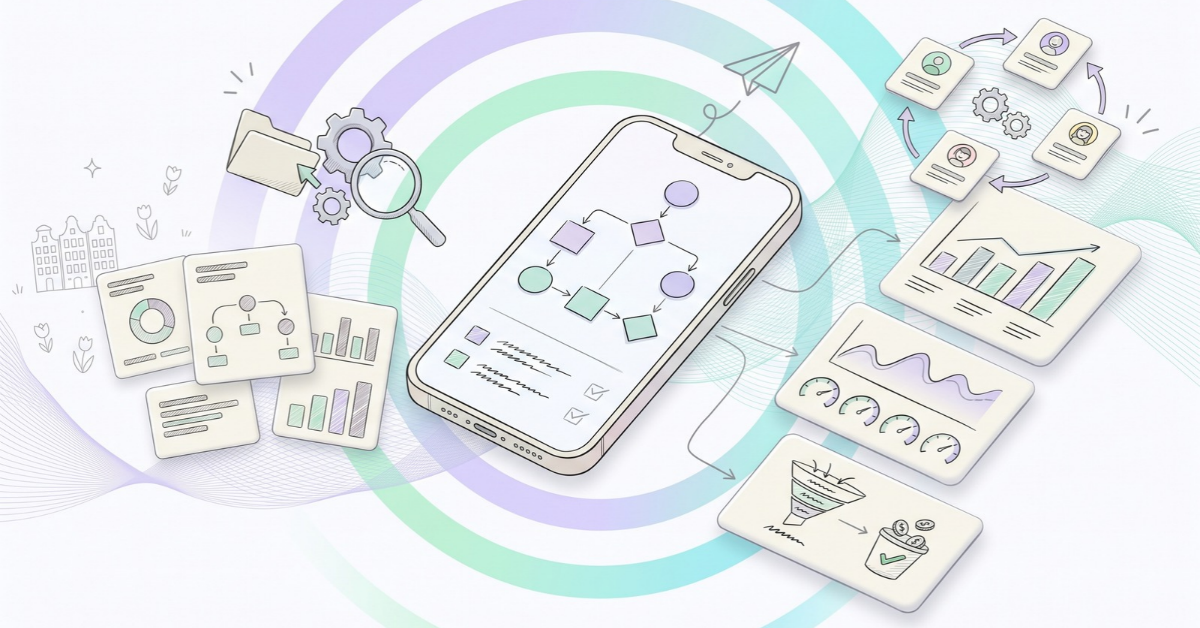
You measure App Store Optimization success by tracking key metrics like app store rankings, organic downloads, conversion rates, and keyword visibility. The most important indicators are improved search rankings for target keywords and increased organic download growth. Success appears gradually, with initial improvements in 2–4 weeks and significant results developing over 3–6 months of consistent optimization efforts.
What are the main metrics that show ASO success?
App store rankings, organic download growth, keyword visibility, and conversion rates form the foundation of ASO measurement. These metrics work together to show how well your optimization efforts improve your app’s discoverability and appeal to potential users.
App store rankings reveal how your app performs for specific keywords and in category charts. You want to see steady improvement in positions for your target keywords, particularly those that drive the most relevant traffic to your app.
Organic download growth indicates genuine ASO success because it shows people finding your app naturally through search rather than paid promotion. This metric demonstrates that your optimization efforts are connecting your app with users who are actively searching for solutions like yours.
Conversion rates measure how many people download your app after viewing your store listing. Higher conversion rates mean your app screenshots, description, and overall presentation effectively convince browsers to become users. This metric helps you understand whether your store listing optimizations resonate with your target audience.
Keyword visibility tracks how often your app appears in search results across all your target terms. Broader visibility typically leads to more organic discovery opportunities and sustainable download growth over time.
How do you track app store ranking improvements?
You track ranking improvements using specialized ASO tools that monitor your app’s position for specific keywords across different app stores. These tools check rankings daily and provide historical data to show progress over time.
Most tracking tools allow you to monitor rankings in different countries and languages, which helps if you target multiple markets. You can see how your app performs for the same keyword in various regions and adjust your optimization strategy accordingly.
Ranking fluctuations happen naturally, so focus on trends rather than daily changes. Your app might rank in position 15 one day and position 12 the next without any changes to your listing. What matters is the overall direction over weeks and months.
Check your rankings weekly rather than daily to avoid getting distracted by normal fluctuations. Monthly reviews help you identify genuine trends and determine whether your optimization changes are working effectively.
Category rankings require separate tracking because they follow different algorithms than keyword rankings. Your app might improve in keyword searches while staying steady in category charts, or vice versa. Both types of rankings contribute to overall visibility and organic growth.
What’s the difference between organic and paid app downloads?
Organic downloads come from users who find your app through natural app store searches, browsing, or recommendations without any paid advertising. Paid downloads result from advertising campaigns where you pay to promote your app through various channels.
Organic downloads indicate ASO success because they show your optimization efforts are working. When users search for terms related to your app and choose to download it, that demonstrates effective keyword targeting and compelling store listing elements.
Attribution tracking helps you separate organic from paid downloads accurately. Most analytics platforms automatically categorize downloads based on their source, whether from direct app store searches, advertising campaigns, or other promotional activities.
Organic growth tends to be more sustainable and cost-effective than paid acquisition. While paid campaigns can drive immediate downloads, organic downloads continue flowing without ongoing advertising spend, making them valuable for long-term app growth.
You can identify organic downloads by looking at traffic sources in your app analytics. Downloads marked as coming from “app store search” or “app store browsing” typically represent organic acquisition, while those from advertising platforms indicate paid sources.
How long does it take to see ASO results?
Initial ASO improvements typically appear within 2–4 weeks, with more significant results developing over 3–6 months of consistent optimization. The timeline depends on your app’s current performance, competition level, and how comprehensive your optimization efforts are.
Quick wins often include improved conversion rates from better screenshots or descriptions. You might notice higher download rates from existing traffic within the first few weeks after updating your store listing elements.
Ranking improvements take longer because app store algorithms need time to process your changes and evaluate their effectiveness. Your app’s position for target keywords usually improves gradually as the algorithms recognize your optimization efforts and user response.
Competitive factors influence your timeline significantly. Apps in highly competitive categories or targeting popular keywords typically need more time to see substantial ranking improvements compared to those in niche markets.
Long-term optimization benefits compound over time. After six months of consistent ASO work, many apps experience accelerated organic growth as improved rankings lead to more downloads, which further boost rankings in a positive feedback loop.
Patience remains important because sustainable ASO results build gradually. Apps that see dramatic overnight improvements often experience equally dramatic drops, while steady optimization creates lasting growth and visibility improvements.
Which tools help measure app store optimization performance?
App analytics platforms, specialized ASO tools, and app store connect dashboards provide comprehensive measurement capabilities for tracking your optimization performance. Each tool type offers different insights that work together to give you a complete picture.
Free options include App Store Connect and Google Play Console, which provide basic download data, keyword performance, and conversion metrics directly from the app stores. These platforms show you fundamental metrics without additional cost.
Specialized ASO tools like Sensor Tower, Mobile Action, and App Radar offer advanced features including keyword ranking tracking, competitor analysis, and market intelligence. These paid platforms provide deeper insights than free alternatives but require monthly subscriptions.
Analytics integration becomes important for connecting ASO performance to user behavior and retention. Tools that combine app store metrics with in-app analytics help you understand whether your ASO efforts attract users who actually engage with your app.
Choose tools based on your specific needs and budget. Small apps might start with free platforms and upgrade to paid tools as they grow. Larger apps often benefit from comprehensive paid solutions that provide detailed competitive intelligence and advanced tracking capabilities.
For businesses seeking professional ASO support, working with specialists who understand these tools and metrics can accelerate your optimization results. We help apps implement effective measurement strategies and interpret data to drive continuous improvement in app store optimization performance.
Frequently Asked Questions
What should I do if my app rankings drop after implementing ASO changes?
Ranking drops after ASO changes are often temporary as app store algorithms adjust to your updates. Monitor the situation for 2-3 weeks before making additional changes, as premature adjustments can disrupt the algorithm’s evaluation process. If rankings don’t recover, consider reverting recent changes and testing them individually to identify which modifications caused the decline.
How often should I update my app's keywords and metadata for optimal ASO performance?
Update your app’s metadata every 4-6 weeks for major changes, or monthly for minor keyword adjustments. Avoid making changes too frequently as this can confuse app store algorithms and hurt your rankings. Focus on testing one element at a time (like title, description, or keywords) to clearly measure the impact of each change.
What's a realistic organic download growth rate to expect from good ASO?
Well-optimized apps typically see 20-50% organic download growth within the first 3-6 months, though this varies significantly by category and competition level. Apps in competitive niches might see slower initial growth (10-20%), while those in less saturated markets could experience 100%+ growth. Focus on consistent month-over-month improvement rather than dramatic short-term spikes.
How do I know if my conversion rate improvements are actually due to ASO and not external factors?
Track conversion rates alongside other metrics like traffic sources, seasonal trends, and any marketing campaigns you’re running. Use A/B testing when possible to isolate the impact of specific ASO changes. Compare your conversion rate improvements to industry benchmarks and competitor performance to determine if gains are due to your optimization efforts or broader market changes.
Should I focus on improving rankings for high-volume keywords or less competitive long-tail keywords first?
Start with less competitive long-tail keywords that are highly relevant to your app’s core functionality. These keywords are easier to rank for and often convert better because they target users with specific intent. Once you establish strong positions for long-tail terms, gradually work toward more competitive, high-volume keywords using the authority you’ve built.
What are the most common ASO mistakes that hurt measurement accuracy?
The biggest mistakes include changing multiple elements simultaneously (making it impossible to identify what worked), focusing only on download numbers without considering user quality, and not accounting for seasonal fluctuations in data analysis. Also avoid measuring success too early—give changes at least 2-4 weeks to show meaningful results before drawing conclusions.
How do I set realistic ASO goals and benchmarks for my specific app category?
Research your top 10 competitors’ performance using ASO tools to establish category benchmarks for rankings, keywords, and estimated downloads. Set initial goals to reach the bottom of the top 100 for your primary keywords, then aim for top 50, top 25, and so on. Factor in your app’s age, current performance, and available resources when setting timelines—newer apps typically need 6-12 months to see substantial competitive improvements.
Related Articles
- Why does my app link work on Android but not iOS?
- 5 reasons you can't trust your app analytics dashboard
- Best MMP pricing compared for apps: AppsFlyer vs Adjust
- How do I know if our app measurement setup is outdated?
- How do I know if an app campaign is actually profitable?
- What is the role of a mobile measurement partner in app advertising?
- Why is it important to advertise your app consistently?
- 6 key metrics to track when you advertise your app successfully
- Should startups advertise their app differently than enterprises?
- How does A/B testing work in the app store?

 EN
EN  NL
NL