

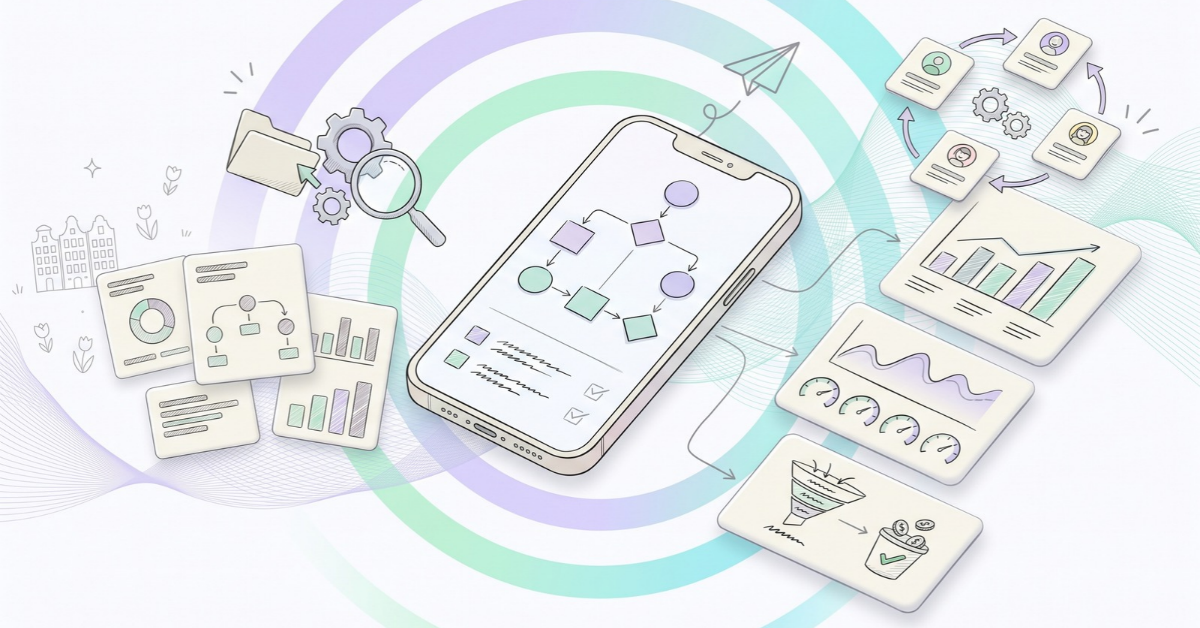
Most app growth plans are built on a reactive lie. We look at last month’s data, see a trend, and try to catch up. But in the App Store, reacting is just a polite way of saying you’re too late. At Wuzzon, we see this constantly: the “Laggard Effect.” A brand sees search volume for a term like “hay fever” or “Champions League” starting to spike, so they update their metadata. But because of store indexing time, they don’t actually become relevant until the peak is over. You aren’t catching the wave; you’re just swimming in the wake. Embracing Predictive App Growth is crucial for staying ahead in the competitive app market.

The 21-Day Rule
To truly innovate and succeed, businesses must leverage Predictive App Growth strategies that anticipate trends rather than merely react to them.
ASO isn’t instant. If you want to own a search peak, you have to be indexed and live at least 21 days before the surge hits. We’ve moved away from static ASO toward a Predictive Growth Stack. The key to achieving this is through Predictive App Growth.
How the Prediction Engine Works
Our process isn’t about checking the weather today; it’s about anticipating the search behavior of tomorrow. To do this, we follow a specific operational rhythm:
- 3 Weeks Out: The “Runway Alert” fires. Our ASO team drafts keyword candidates and creative briefs are finalized.
- 2 Weeks Out: Production and submission happen. Assets are uploaded and localization is rolled out.
- 1 Week Out: The critical window. Metadata is submitted for review to ensure the listing is live and indexed before the first user even types the search term.

Case Study: From Weather Spikes to “Men with Fish”
Seasonality isn’t always as simple as summer vs. winter. For a Weather App, we don’t just wait for rain. We use historical data to trigger updates for “Winter Sports” in November and “Pollen/Hay Fever” alerts in early spring—ensuring the app is the first answer for high-intent searches.
Take our work with Fishing Apps. For this audience, intent is hyper-local and hyper-specific. In the Southern US, users search for Bass in March, while in the North, they are still looking for Ice Fishing gear. If you show a picture of a Bass to someone standing on a frozen lake, your conversion rate dies.
By using a predictive tracker, we automatically swap out Custom Product Pages (CPPs) to show the right fish to the right person 21 days before their local season starts.

The Sports Betting Pulse
In the Sports Betting world, the “season” changes every week. You have the Eredivisie on the weekend and the Champions League on Tuesday. If your App Store page is still showing football assets when the whole country is watching Max Verstappen on a Sunday afternoon, you are leaking conversions.
By aligning the store’s visual “vibe” with the exact event the user just saw on TV, we remove friction and drive the ASA Flywheel.
The ASA Flywheel (Synergy, Baby!)
This isn’t just an organic play. It’s the engine behind your Apple Search Ads (ASA). With the recent rollout of Multi-Slot Search Ads, the App Store is getting more crowded. Ads now appear in positions #2 and #3, and Apple’s AI picks winners based on “Total Relevance.”
When your ASO is dynamically aligned with real-world intent, your ads get cheaper. High relevance leads to a better Tap-Through Rate (TTR), which lowers your Cost Per Click. It’s a 2-for-1 deal: for every two paid downloads, you often trigger a “free” organic one.
Stop Guessing. Start Growing.
In our world, hope isn’t a strategy and luck isn’t a KPI. Winning in 2026 requires moving from luck-based planning to data-driven execution. Stop leaning on fate and start leaning on data.
Ready to beat the calendar? Download our App Growth Framework Guide or get in touch to find your app’s next peak.

 EN
EN  NL
NL