

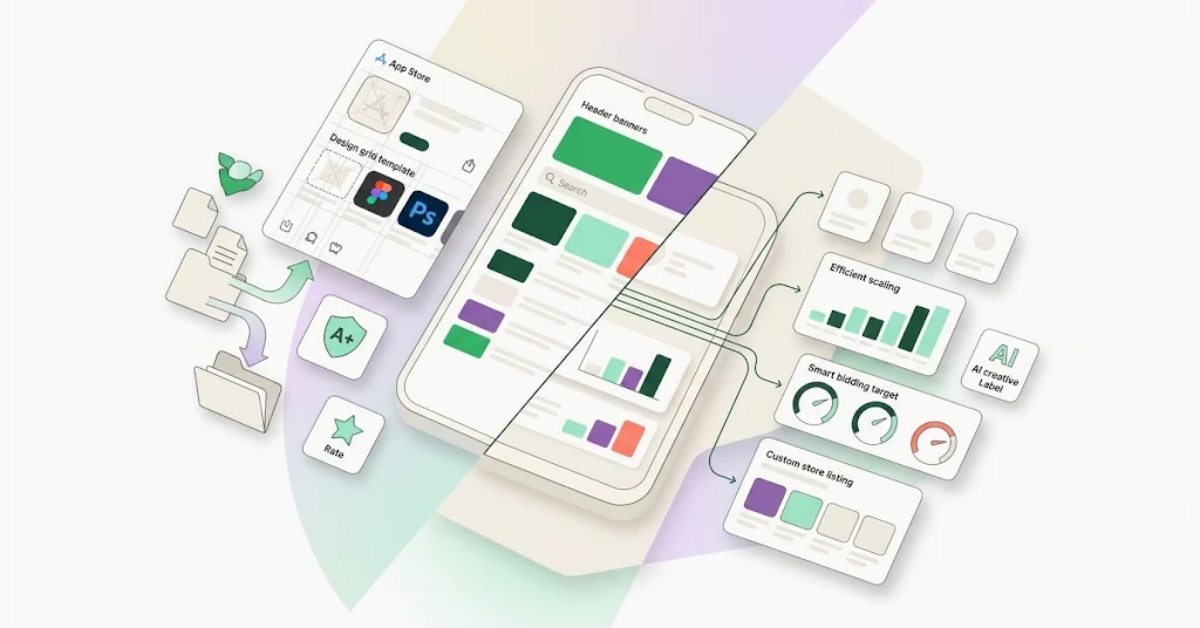
To advertise your app effectively and scale quickly, you need a strategic approach that goes beyond basic promotion. Success comes from combining App Store Optimization with targeted paid campaigns, leveraging data-driven insights, and building sustainable growth systems. These 11 proven practices help you maximize visibility, attract high-quality users, and create lasting momentum for your mobile application.
Each strategy works together to create a comprehensive growth engine that drives both immediate results and long-term success. From mastering organic discovery to scaling performance campaigns, these practices form the foundation of effective app marketing.
Why App Advertising Is Critical for Modern Growth
App stores now host over 5 million apps across iOS and Android platforms, making organic discovery increasingly difficult. Users typically discover new apps through search, recommendations, or targeted advertising rather than by browsing categories. This reality makes strategic app advertising necessary to reach your target audience.
Modern app advertising works differently from traditional marketing. You need to understand user intent, optimize for specific actions within your app, and measure success through lifetime value rather than just downloads. The most successful apps combine multiple advertising channels with strong retention strategies to build sustainable growth.
1: Master App Store Optimization Before Paid Ads
App Store Optimization forms the foundation of all successful app advertising efforts. Your app store listing converts visitors into downloads, making it the final step in every advertising funnel. Start by researching keywords your target users actually search for, then optimize your app title, subtitle, and description accordingly.
Focus on creating compelling visuals that clearly communicate your app’s value proposition. Your icon, screenshots, and preview video should work together to tell a cohesive story about what your app does and why users need it. Test different creative combinations to find what resonates most with your audience.
2: Target High-Intent Keywords in Apple Search Ads
Apple Search Ads captures users at the exact moment they search for solutions your app provides. These users show high intent and typically convert better than traffic from other advertising channels. Start with exact-match keywords related to your app’s core functionality, then expand to broader terms as you gather performance data.
Monitor your keyword performance closely and adjust bids based on conversion rates rather than just cost per tap. High-intent keywords often justify higher costs because they bring users who are more likely to engage with your app long-term. Use Search Ads’ audience refinement options to target users based on demographics and previous app usage patterns.
3: Leverage Creative Testing Across All Platforms
Creative assets can make or break your advertising campaigns across every platform. Different audiences respond to different messaging, visuals, and calls to action, making systematic creative testing essential for optimization. Develop multiple variations of your ads that highlight different features, benefits, or use cases.
Test video ads alongside static images, experiment with different messaging angles, and create platform-specific content that feels native to each environment. What works on TikTok differs significantly from what performs on Google or Meta platforms. Continuously rotate winning creatives and refresh underperforming assets to maintain campaign effectiveness.
4: What Attribution Tools Reveal About User Quality
Attribution tools like Adjust, AppsFlyer, and Branch provide insights that go far beyond basic download tracking. These platforms reveal which advertising channels bring users who actually engage with your app, complete important actions, and generate revenue over time. This data helps you allocate budget to the most effective traffic sources.
Set up proper event tracking for key actions within your app, such as account creation, first purchase, or feature usage. Compare user behavior across different acquisition channels to identify patterns and optimize your campaigns accordingly. Quality metrics matter more than volume when building a sustainable user base.
5: Scale With Performance-Based Network Partnerships
Performance networks offer access to diverse traffic sources while maintaining cost control through fixed cost-per-install or cost-per-action pricing models. These partnerships allow you to scale user acquisition without the complexity of managing multiple individual campaigns across various platforms.
Look for networks that provide transparent reporting and allow you to optimize for post-install events rather than just downloads. Quality performance networks pre-screen their traffic sources and provide fraud protection, helping you avoid wasted spend on low-quality users. This approach works particularly well when you need to scale quickly while maintaining predictable costs.
6: Optimize User Acquisition Funnels for Conversions
Your user acquisition funnel extends from the initial ad impression through app store conversion to the first meaningful action within your app. Each step presents opportunities for optimization and potential points of user drop-off. Analyze your funnel metrics to identify where users abandon the process and implement improvements accordingly.
Create seamless experiences that guide users from ad click to app engagement. Your advertising creative should align with your app store listing, which should align with your onboarding experience. Reduce friction at every step while clearly communicating the value users will receive by downloading and using your app.
7: Implement Retention Campaigns for Existing Users
Retaining existing users costs significantly less than acquiring new ones and often generates higher lifetime value. Develop campaigns that re-engage users who have downloaded your app but haven’t used it recently, or encourage existing users to explore new features and increase their engagement levels.
Use push notifications, email campaigns, and retargeting ads to bring users back to your app. Personalize these messages based on user behavior and preferences to improve their effectiveness. Focus on providing value rather than just asking users to return, highlighting new content, features, or benefits they might have missed.
8: Use Cross-Platform Promotion for Maximum Reach
Different user segments prefer different platforms, making cross-platform promotion necessary for comprehensive reach. Your target audience likely uses multiple social media platforms, search engines, and content sites throughout their daily routines. Develop platform-specific strategies that leverage each channel’s unique strengths.
Coordinate your messaging across platforms while adapting creative assets and targeting approaches for each environment. Track user journeys across touchpoints to understand how different platforms work together in your overall acquisition strategy. This holistic approach helps you capture users regardless of where they first encounter your brand.
9: Track LTV to Optimize Long-Term Profitability
Lifetime value (LTV) metrics reveal the true profitability of your user acquisition efforts. Calculate LTV by analyzing user behavior patterns, purchase frequency, and retention rates over extended periods. This data helps you determine appropriate acquisition costs and identify your most valuable user segments.
Use LTV insights to optimize your targeting and bidding strategies. Users with higher lifetime value justify higher acquisition costs, allowing you to be more competitive in advertising auctions. Segment your users based on LTV potential and create specific campaigns designed to attract similar high-value prospects.
10: Automate Bid Management for Consistent Results
Manual bid management becomes impractical as your campaigns scale across multiple platforms and audiences. Automated bidding systems use machine learning to optimize your bids in real time based on performance data and campaign objectives. These systems react faster to changes in competition and user behavior than manual adjustments allow.
Set clear performance targets for your automated bidding systems and monitor their performance regularly. While automation handles the tactical adjustments, you still need to provide strategic direction and make campaign-level optimizations based on broader business objectives and market conditions.
11: Scale Winning Campaigns Without Losing Efficiency
Scaling successful campaigns requires a careful balance between increased reach and maintained performance. Gradually increase budgets for winning campaigns while monitoring key metrics to ensure efficiency doesn’t decline. Rapid scaling can lead to audience fatigue, increased competition, and diminished returns.
Expand successful campaigns by testing similar audiences, additional keywords, or related creative variations. Create new campaigns based on winning elements rather than simply increasing budgets on existing ones. This approach helps you maintain performance while accessing broader audiences and growth opportunities.
Build Your App’s Sustainable Growth Engine
Implementing these practices creates a comprehensive system for app growth that generates consistent results over time. Success comes from combining multiple strategies, continuously testing and optimizing your approach, and focusing on long-term user value rather than just immediate downloads.
We’ve helped numerous apps implement these strategies through our comprehensive performance marketing approach. The key lies in starting with solid foundations, scaling methodically, and always prioritizing user quality over quantity. Your app’s growth engine becomes more powerful as these practices work together to create sustainable momentum in the competitive mobile marketplace.
Frequently Asked Questions
How much budget should I allocate to each advertising channel when starting out?
Start with 40% of your budget on Apple Search Ads for high-intent traffic, 30% on Meta platforms for broader reach, 20% on Google Ads for search and display, and reserve 10% for testing new channels. Adjust these percentages based on your app category and initial performance data after 2-4 weeks of testing.
What's the minimum viable budget needed to see meaningful results from app advertising?
You need at least $1,000-2,000 per month to gather statistically significant data across multiple channels. With smaller budgets, focus on 1-2 high-performing channels rather than spreading thin across all platforms. This allows for proper testing and optimization while maintaining campaign momentum.
How long should I wait before determining if a campaign is successful or needs optimization?
Give campaigns at least 7-14 days to exit the learning phase and gather sufficient data. For cost-per-install campaigns, wait until you have at least 50-100 installs per ad set. For campaigns optimizing for post-install events, allow 2-3 weeks since these actions typically occur days after installation.
What are the most common mistakes that cause app advertising campaigns to fail?
The biggest mistakes include poor app store optimization before launching ads, targeting too broad audiences initially, focusing solely on download volume instead of user quality, and not setting up proper attribution tracking. Many advertisers also scale budgets too quickly without maintaining creative freshness, leading to audience fatigue.
How do I know if my LTV calculations are accurate and actionable for bidding decisions?
Ensure you’re tracking users for at least 30-90 days post-install and include all revenue sources (subscriptions, in-app purchases, ad revenue). Your LTV should be 3-4x higher than your customer acquisition cost for sustainable growth. Use cohort analysis to validate your projections and adjust bidding strategies accordingly.
Should I pause underperforming campaigns immediately or give them more time to optimize?
Pause campaigns that show consistently poor performance after the learning phase (7-14 days) and have spent at least 2-3x your target cost per install without results. However, if campaigns show improving trends or seasonal patterns, extend the testing period. Always analyze the data behind the performance rather than making decisions based solely on surface metrics.
How can I effectively compete against apps with much larger advertising budgets?
Focus on niche, long-tail keywords and highly specific audience segments where larger competitors may not be bidding aggressively. Invest heavily in creative quality and unique value propositions that differentiate your app. Leverage organic growth strategies like ASO and user-generated content to reduce dependence on paid acquisition, then reinvest savings into high-performing paid channels.
Related Articles
- 6 elements to A/B test on your app store listing
- AppsFlyer vs Singular: pricing compared for app marketing
- How much does it cost to advertise your app effectively?
- Should you advertise your app globally or locally first?
- What is the difference between iOS and Android A/B testing options?
- What are in-app review prompts and how do they work?
- Do app preview videos increase app downloads?
- Does the what's new section impact app store optimization?
- 8 best practices for app store keyword optimization
- What are backend keywords on iOS?


 EN
EN  NL
NL