

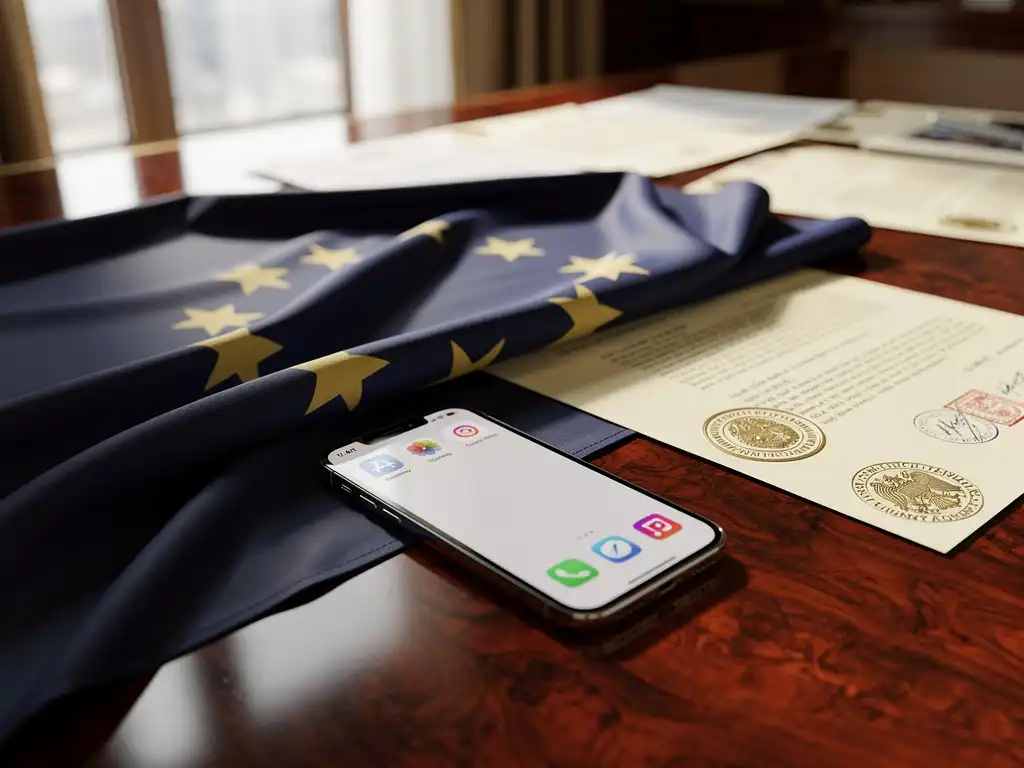
App advertising in Europe requires compliance with multiple overlapping regulations that protect user privacy, ensure fair competition, and safeguard consumer rights. The legal landscape includes the GDPR for data protection, the Digital Services Act for platform accountability, consumer protection laws for transparent marketing practices, and specific app store policies that govern how you can promote your mobile applications.
Understanding these requirements isn’t just about avoiding penalties—it’s about building trust with your European users and creating sustainable growth for your app. Let’s break down the specific legal requirements you need to know when advertising your app in European markets.
What Are the Main Legal Requirements for App Advertising in Europe?
European app advertising must comply with the GDPR’s data protection rules, the Digital Services Act’s transparency requirements, consumer protection laws, and platform-specific advertising policies. These regulations work together to ensure user privacy, prevent misleading advertising, and maintain fair competition in the digital marketplace.
The foundation starts with obtaining proper consent before collecting user data for advertising purposes. You need explicit opt-in consent to track users across apps and websites, and you must clearly explain how their data will be used for advertising. This applies whether you’re running Apple Search Ads, Google App campaigns, or social media advertising.
Beyond data protection, your advertising content must be truthful and not misleading. This means your app store screenshots, video previews, and ad creatives must accurately represent your app’s functionality. You can’t promise features that don’t exist or exaggerate your app’s capabilities to drive downloads.
How Does GDPR Apply to Mobile App Advertising?
The GDPR requires explicit user consent before collecting personal data for app advertising, mandates clear privacy notices explaining data usage, and gives users the right to access, delete, or port their advertising data. Non-compliance can result in fines of up to 4% of annual global revenue or €20 million, whichever is higher.
When you advertise apps, you’re typically collecting user data through tracking pixels, device identifiers, and behavioral analytics. Under the GDPR, this personal data requires a lawful basis for processing—usually consent or legitimate interest. For advertising purposes, consent is typically the safest legal basis, but it must be freely given, specific, informed, and easy to withdraw.
Your privacy policy must clearly explain what data you collect for advertising, how you use it, and which third parties receive it. Users have the right to know whether you’re sharing their data with advertising networks, attribution platforms, or other marketing partners. You also need to implement data subject rights, allowing users to request copies of their data or ask for deletion.
What Are the New DSA Requirements for App Marketing?
The Digital Services Act requires large online platforms to provide transparency in advertising, implement risk assessment procedures, and offer users more control over targeted advertising. App marketers must ensure their advertising partners comply with the DSA’s transparency and content moderation requirements.
The DSA affects how major advertising platforms like Google, Meta, and TikTok operate their ad systems. These platforms must now provide detailed information about why users see specific ads, including the main parameters used for targeting. As an app advertiser, you benefit from increased transparency but must also ensure your ad content meets stricter content policy requirements.
The regulation introduces new obligations for content moderation and illegal content removal. Your app advertising creative must comply with enhanced content policies, and platforms have faster response times for addressing policy violations. This means greater scrutiny of your ad approval process and potential account restrictions for repeated policy violations.
What Consumer Protection Laws Apply to App Advertising?
European consumer protection laws require app advertising to be truthful, not misleading, and clearly distinguish advertising content from organic content. Unfair commercial practices are prohibited, including aggressive marketing tactics, hidden costs, and false claims about app functionality or benefits.
Your app store listings and advertising must accurately represent what users will experience. This includes honest descriptions of in-app purchases, subscription costs, and premium features. If your app offers a free trial that converts to a paid subscription, this must be clearly disclosed upfront, not buried in the terms and conditions.
Special attention applies to vulnerable consumers, including children. If your app targets minors, advertising restrictions become much stricter. You cannot use persuasive techniques that exploit children’s inexperience or credulity, and you must obtain parental consent for data collection from users under 16 (or lower, depending on the member state).
How Do You Ensure Compliant App Store Advertising?
App store compliance requires following platform-specific advertising policies, accurately representing app functionality in metadata and creatives, implementing proper age ratings, and ensuring in-app purchase transparency. Both the Apple App Store and Google Play have detailed advertising guidelines that supplement European legal requirements.
Start with accurate app metadata—your title, description, and keywords must reflect actual app functionality. Screenshots and preview videos should show real app interfaces, not mockups or exaggerated representations. Apple and Google both use automated and human review processes to check for misleading content.
Age ratings require special attention because they affect advertising targeting and content restrictions. If your app is rated for children, you face additional limitations on data collection, advertising content, and behavioral targeting. Ensure your age rating accurately reflects your app’s content and functionality to avoid policy violations.
What Are the Penalties for Non-Compliant App Advertising in Europe?
Penalties for non-compliant app advertising range from GDPR fines of up to €20 million or 4% of global revenue, to consumer protection fines that vary by member state, to app store account suspension or removal, as well as potential civil lawsuits from affected users or competitors.
GDPR violations carry the heaviest financial penalties, but enforcement varies significantly between EU member states. Some data protection authorities focus on education and compliance support, while others impose substantial fines for serious violations. A key factor is demonstrating good-faith efforts toward compliance and promptly remediating any issues discovered.
App store penalties can be equally damaging to your business. Apple and Google can suspend advertising accounts, remove apps from their stores, or restrict app functionality without advance notice. Unlike regulatory fines, app store penalties can immediately halt your user acquisition and revenue generation, making prevention far more valuable than remediation.
Navigating European app advertising regulations requires ongoing attention and expertise. We help app developers and companies build compliant advertising strategies that protect user privacy while driving sustainable growth. Our performance marketing services ensure your campaigns meet all regulatory requirements while maximizing your return on advertising spend across European markets.
Frequently Asked Questions
How do I implement proper consent mechanisms for app advertising in Europe?
Implement a Consent Management Platform (CMP) that collects explicit opt-in consent before any tracking begins. Use clear, plain language to explain data usage, provide granular consent options for different advertising purposes, and ensure users can easily withdraw consent at any time. Popular solutions include OneTrust, Cookiebot, or platform-specific tools like Google’s User Messaging Platform.
What should I do if my app advertising account gets suspended for compliance violations?
Immediately review the specific policy violation cited by the platform and document all remediation steps taken. Contact the platform’s support team with a detailed compliance plan, remove or modify violating content, and implement stronger review processes for future campaigns. Keep detailed records of your compliance efforts as this demonstrates good faith to both platforms and regulators.
Do I need different compliance strategies for different European countries?
While GDPR and DSA apply EU-wide, some member states have additional requirements or stricter enforcement. For example, France’s CNIL has specific guidelines for mobile advertising, and Germany has strict rules about children’s data. Research country-specific regulations for your primary markets and consider working with local legal experts for high-value territories.
How can I advertise my app to children while staying compliant in Europe?
Obtain verifiable parental consent before collecting any data from users under 16, avoid persuasive advertising techniques that exploit children’s inexperience, and implement strict data minimization practices. Use age-appropriate content, clearly disclose any costs, and consider implementing additional safeguards like spending limits or parental controls for in-app purchases.
What's the difference between legitimate interest and consent for app advertising data?
Consent requires explicit user permission and is easily withdrawable, making it safer for advertising use cases. Legitimate interest allows data processing without explicit consent but requires balancing your business needs against user privacy rights and providing easy opt-out mechanisms. For advertising purposes, consent is generally recommended as it’s less legally risky and more transparent to users.
How do I audit my existing app advertising campaigns for European compliance?
Conduct a comprehensive data audit to identify all personal data collection points, review your privacy policies and consent mechanisms, verify that your ad creatives accurately represent app functionality, and check that your targeting parameters comply with platform policies. Document everything and create a remediation plan for any gaps found, prioritizing high-risk issues like missing consent or misleading advertising claims.
Related Articles
- 6 ways to find your app's biggest drop-off point
- What is deferred deep linking for apps on iOS?
- Why is my app ad reporting always delayed?
- How did iOS14 impact app attribution?
- 4 signs your finance team shouldn't trust your app data
- 11 best practices to advertise your app and scale fast
- What are the most common mistakes when advertising apps?
- How do you respond to negative app store reviews?
- 8 best practices for app store keyword optimization
- What is the difference between Apple App Store and Google Play Store optimization?



 EN
EN  NL
NL