

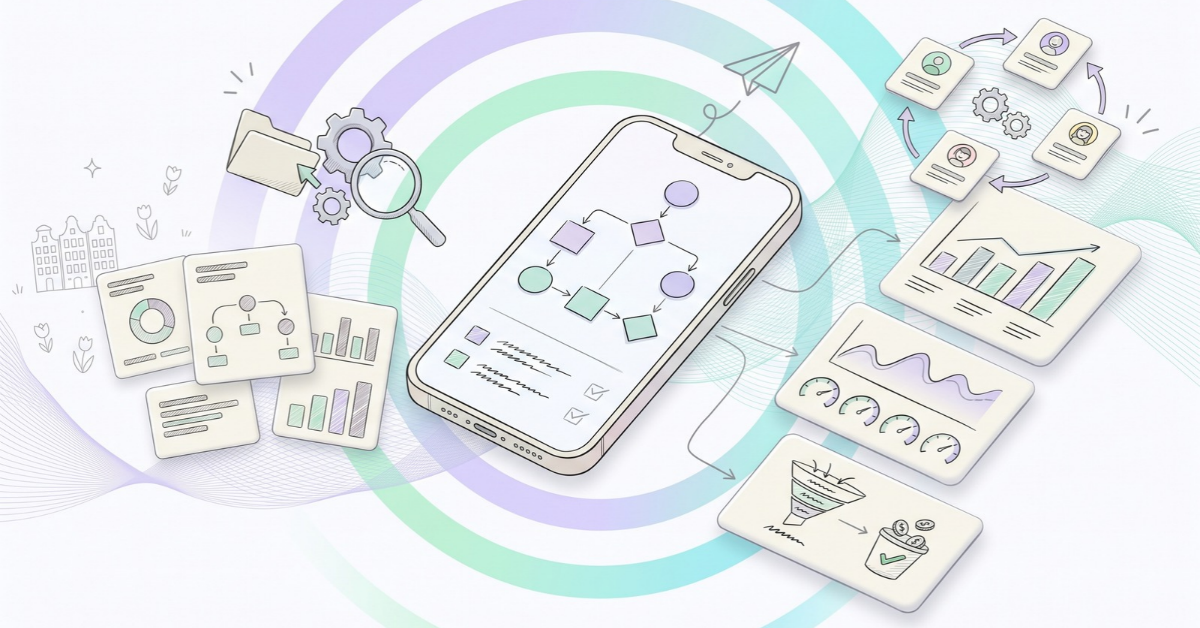
Om je app in de huidige, overvolle markt onder de aandacht te brengen, is strategische planning ruim voor de lancering essentieel. Reclame voorafgaand aan de lancering legt de basis voor het succes van je app door naamsbekendheid op te bouwen, anticipatie te creëren en de infrastructuur te leggen die nodig is om je marketinginspanningen te volgen en te optimaliseren. De sleutel is om vroeg te beginnen en meerdere marketingkanalen te coördineren om maximale impact te creëren wanneer je app live gaat.
Deze vijf stappen helpen je om je app effectief te promoten vóór de lancering, zodat je meteen goed van start gaat met een doordachte marketingstrategie die vanaf dag één downloads genereert.
Waarom reclame vóór de lancering het succes van een app bepaalt
Reclame voorafgaand aan de lancering creëert een momentum dat je app door de cruciale eerste weken in de app stores heen helpt. Zonder vroege voorbereiding wordt je app in stilte gelanceerd en moet je concurreren met duizenden andere apps om aandacht, zonder gevestigde naam of verwachtingen.
Apps die investeren in marketing vóór de lancering behalen aanzienlijk hogere downloadcijfers in de eerste maand dan apps die pas na de lancering beginnen met adverteren. Dit vroege succes geeft de algoritmes van de app store het signaal dat uw app de moeite waard is om te promoten, waardoor een positieve feedbackloop ontstaat die de organische zichtbaarheid vergroot. Bovendien stelt een goede voorbereiding vóór de lancering u in staat potentiële problemen te identificeren en op te lossen voordat ze echte gebruikers treffen, wat zowel geld als reputatie bespaart.
1: Bouw vroegtijdig aan je aanwezigheid in de app stores
Door zo snel mogelijk een vermelding in de App Store aan te maken, heb je een voorsprong op het gebied van optimalisatie en kunnen potentiële gebruikers je app ontdekken vóór de lancering. Zowel Apple als Google bieden de mogelijkheid om je app ter beoordeling in te dienen en een aanwezigheid in de App Store te creëren zonder deze direct beschikbaar te stellen voor download.
Focus op het schrijven van aantrekkelijke appbeschrijvingen die je waardepropositie duidelijk overbrengen. Gebruik relevante zoekwoorden op een natuurlijke manier in je beschrijving, maar geef de voorkeur aan duidelijkheid boven een overdaad aan zoekwoorden. Je apptitel moet memorabel en vindbaar zijn, terwijl je subtitel of korte beschrijving gebruikers binnen de eerste paar woorden moet boeien.
Ontwerp opvallende app-pictogrammen en screenshots die de beste functies van je app laten zien. Deze visuele elementen bepalen vaak of gebruikers doorklikken om meer over je app te weten te komen. Overweeg om verschillende sets screenshots te maken voor verschillende gebruikerssegmenten of geografische markten om de aantrekkingskracht op je doelgroep te maximaliseren.
2: Creëer buzz met teaser-campagnes
Teaser-campagnes wekken anticipatie op en creëren een community van geïnteresseerde gebruikers vóór de lancering van je app. Begin met eenvoudige aankondigingen op je bestaande marketingkanalen en breid dit vervolgens uit naar gerichte socialmediacampagnes en samenwerkingen met influencers.
Deel content achter de schermen die potentiële gebruikers inzicht geeft in je ontwikkelingsproces. Dit kan bestaan uit ontwerpvoorbeelden, previews van functies of interviews met ontwikkelaars. Mensen vinden het fijn om het gevoel te hebben dat ze erbij horen, en deze content zorgt voor een emotionele betrokkenheid bij het succes van je app.
Overweeg een landingspagina te maken waar geïnteresseerde gebruikers zich kunnen aanmelden voor lanceringsmeldingen. Zo bouw je een e-maillijst op van zeer betrokken potentiële klanten die al geïnteresseerd zijn in je app. Je kunt deze lijst onderhouden met updates, exclusieve previews en mogelijkheden voor vroege toegang, waardoor abonnees zich gewaardeerd voelen.
3: Infrastructuur voor tracking en analyses opzetten
Een goede infrastructuur voor het bijhouden van gegevens moet vóór de lancering aanwezig zijn om de effectiviteit van uw advertenties te meten en campagnes vanaf dag één te optimaliseren. Dit omvat het inschakelen van partners voor mobiele metingen, het instellen van conversietracking en het definiëren van de belangrijkste prestatie-indicatoren voor uw app.
Installeer analysetools die het gebruikersgedrag binnen uw app volgen, niet alleen downloads. Inzicht in hoe gebruikers met uw app omgaan, helpt u zowel de gebruikerservaring als uw advertenties te optimaliseren. Stel gebeurtenisregistratie in voor belangrijke acties zoals het aanmaken van een account, aankopen of het gebruik van functies.
Test je trackingconfiguratie grondig vóór de lancering met behulp van interne testgroepen. Controleer of alle gebeurtenissen correct worden geactiveerd en of de gegevensstroom tussen je app, analyseplatforms en advertentienetwerken goed verloopt. Het oplossen van trackingproblemen na de lancering betekent dat je waardevolle gegevens verliest tijdens je belangrijkste marketingperiode.
4: Bereid uw betaalde advertentiecampagnes voor
Het opzetten van effectieve betaalde advertentiecampagnes kost tijd, dus begin ruim voor de lanceringsdatum met het maken van je campagnes. Onderzoek je doelgroep, identificeer de meest relevante zoekwoorden en ontwikkel creatieve uitingen die potentiële gebruikers aanspreken.
Maak campagnes op meerdere platforms om je bereik te maximaliseren. Apple Search Ads werken goed voor iOS-apps, terwijl Google Ads verkeer naar je app store-pagina kan leiden. Sociale mediaplatforms zoals Facebook, Instagram en TikTok bieden geavanceerde targetingopties waarmee je gebruikers kunt bereiken die het meest waarschijnlijk interactie met je app zullen hebben.
Ontwikkel meerdere advertentievarianten om verschillende boodschappen, visuals en call-to-actions te testen. Wat aanslaat bij het ene segment van je doelgroep, werkt misschien niet voor het andere. Door meerdere campagnes klaar te hebben, kun je snel lanceren en beginnen met optimaliseren op basis van echte prestatiegegevens.
5: Coördineer uw multichannel-lanceringstrategie
Een succesvolle app-lancering vereist coördinatie tussen al je marketingkanalen om maximale impact te creëren. Plan je contentkalender, e-mailcampagnes, socialmediaberichten en betaalde advertenties zo dat ze op elkaar aansluiten in plaats van met elkaar te concurreren.
Stem je verschillende marketingactiviteiten zo af dat je momentum opbouwt richting de lanceringsdag. Begin met teasercontent, voer de activiteit op naarmate de lancering dichterbij komt en coördineer vervolgens een grote campagne wanneer je app live gaat. Dit creëert een crescendo-effect dat de zichtbaarheid tijdens de lanceringsperiode maximaliseert.
Bereid je team voor op de uitvoering op de lanceringsdag. Wijs specifieke verantwoordelijkheden toe voor het monitoren van campagnes, het reageren op feedback van gebruikers en het snel doorvoeren van optimalisaties op basis van de eerste prestatiegegevens. Duidelijke rollen en processen voorkomen verwarring wanneer je snel moet handelen.
Voer uw pre-lanceringsplan uit voor maximale impact.
De weken voorafgaand aan de lancering van je app bieden je de kans om de basis te leggen voor succes op de lange termijn. Door deze vijf stappen te volgen, creëer je meerdere contactmomenten met potentiële gebruikers en bouw je de infrastructuur op die nodig is om je marketinginspanningen effectief op te schalen.
Onthoud dat adverteren vóór de lancering een investering is in de toekomstige prestaties van je app. Het publiek dat je opbouwt, de tracking die je implementeert en de campagnes die je voorbereidt, dragen allemaal bij aan betere resultaten zodra je app live is. We hebben gezien dat apps die investeren in een grondige voorbereiding vóór de lancering downloadcijfers behalen die drie keer hoger liggen dan die apps die pas na de lancering met marketing beginnen. Als je hulp nodig hebt bij het ontwikkelen van een uitgebreide pre-lanceringsstrategie, dan kunnen wij je daarbij helpen. Performance Marketing Ons team kan u helpen al deze elementen te coördineren voor een maximaal effect op de lanceringsdag.
Veelgestelde vragen
Hoe lang van tevoren moet ik beginnen met mijn reclamecampagne voorafgaand aan de lancering?
Begin minstens 6-8 weken voor de beoogde lanceringsdatum met je pre-lanceringscampagne. Dit geeft je voldoende tijd om je aanwezigheid in de app stores op te bouwen, campagnes te creëren en te testen, een trackinginfrastructuur op te zetten en relevante buzz te genereren. Voor complexere apps of concurrerende markten is het raadzaam om 3-4 maanden van tevoren te beginnen, zodat je grondig kunt testen en optimaliseren.
Wat is de grootste fout die app-ontwikkelaars maken bij marketing voorafgaand aan de lancering?
De meest voorkomende fout is wachten tot de app helemaal af is voordat er met marketingactiviteiten wordt begonnen. Deze aanpak verspilt de waardevolle periode vóór de lancering, waarin je een publiek had kunnen opbouwen, de boodschap had kunnen testen en de verwachtingen had kunnen verhogen. Begin met marketing terwijl je nog in de ontwikkelingsfase zit om de impact van je lancering te maximaliseren.
Hoeveel budget moet ik besteden aan reclame vóór de lancering in vergelijking met marketing ná de lancering?
Reserveer 30-40% van uw totale marketingbudget voor activiteiten voorafgaand aan de lancering. Hoewel dit veel lijkt, legt een investering in de pre-lancering de basis voor alle toekomstige marketinginspanningen. Het publiek dat u opbouwt en de infrastructuur die u in deze periode opzet, zullen de effectiviteit van uw campagnes na de lancering aanzienlijk vergroten.
Kan ik pre-lanceringscampagnes uitvoeren als mijn app nog niet is goedgekeurd in de appwinkels?
Ja, je kunt en moet bewustwordingscampagnes voeren vóórdat de app in de App Store is goedgekeurd. Richt je op het opbouwen van je e-maillijst, het creëren van buzz op sociale media en het wekken van interesse met teasers. Zodra je app in de App Store staat (zelfs voordat de app te downloaden is), kun je verkeer naar je pagina leiden om pre-orders en verlanglijsten te genereren.
Welke statistieken moet ik bijhouden tijdens de pre-lanceringsfase?
Focus op belangrijke indicatoren zoals e-mailaanmeldingen, betrokkenheid op sociale media, weergaven van de app in de app store en pre-orderpercentages. Volg de kosten per lead via verschillende kanalen om uw meest efficiënte acquisitiebronnen te identificeren. Monitor daarnaast de merkbekendheid via enquêtes of tools voor social listening om de interesse van de markt te peilen.
Hoe maak ik effectieve teasercontent zonder te veel over mijn app te onthullen?
Focus op het probleem dat je app oplost in plaats van op specifieke functies. Deel content over de ontwikkeling achter de schermen, de pijnpunten van gebruikers die je app aanpakt en de visie achter je oplossing. Wek nieuwsgierigheid door gedeeltelijke onthullingen, afteltimers en exclusieve previews voor je e-mailabonnees, terwijl je tegelijkertijd een zekere mate van mysterie rond het eindproduct behoudt.
Moet ik voor mijn pre-lanceringscampagnes en post-lanceringscampagnes dezelfde doelgroep targeten?
Begin in de pre-lanceringsfase met een breder, op interesses gebaseerd publiek om naamsbekendheid op te bouwen, en verfijn je targeting na de lancering op basis van daadwerkelijke gebruikersgegevens en -gedrag. De pre-lanceringsfase draait om ontdekking en educatie, terwijl de post-lanceringsfase zich moet richten op gebruikers die de app waarschijnlijk zullen downloaden en gebruiken. Gebruik de pre-lanceringsgegevens om je ideale klantprofiel te verfijnen voor een preciezere targeting na de lancering.
Gerelateerde artikelen
- 4 tekenen dat de rapportage van app-advertenties te handmatig is
- Waarom openen gebruikers mijn app niet een tweede keer?
- Hoe weet ik of onze app-meetinstellingen verouderd zijn?
- 6 tools voor app store-optimalisatie voor tracking en analyses
- Hoe weet ik of we betalen voor app-trackingfuncties die we niet gebruiken?
- Wat zijn aangepaste productpagina's en hoe helpen ze bij de promotie van je app?
- Hoe kun je een app promoten met behulp van prestatiegerichte marketing?
- Wat zijn in-app review prompts en hoe werken ze?
- Leiden app-previewvideo's tot meer app-downloads?
- Wat is het verschil tussen een app-ondertitel en een korte beschrijving?

 EN
EN  NL
NL