

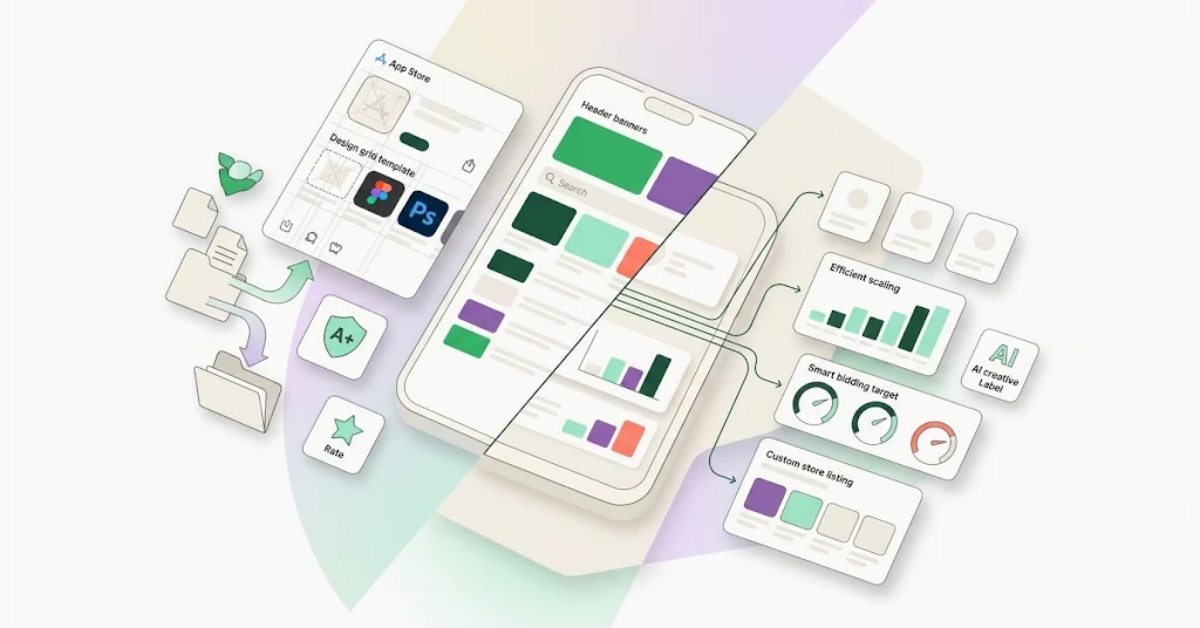
Het kiezen van de juiste platforms om je mobiele app te adverteren, kan cruciaal zijn voor het succes van je gebruikerswervingsstrategie. Het advertentielandschap voor mobiele apps biedt talloze opties, van zoekmachineplatforms zoals Apple Search Ads en Google Ads tot sociale medianetwerken en gespecialiseerde mobiele advertentienetwerken. Je succes hangt af van je inzicht in waar je doelgroep zich bevindt en welke platforms het beste rendement op investering (ROI) opleveren voor jouw specifieke appcategorie en doelstellingen.
Elk advertentieplatform heeft unieke sterke punten, targetingmogelijkheden en kostenstructuren die beter aansluiten bij verschillende soorten apps en marketingdoelstellingen. Laten we de belangrijkste opties bekijken en u helpen bepalen welke platforms uw advertentiebudget verdienen.
Wat zijn de belangrijkste platformen voor reclame op mobiele apps?
De belangrijkste platforms voor advertenties in mobiele apps zijn onder andere Apple Search Ads, Google Ads, Meta (Facebook en Instagram), TikTok, X (voorheen Twitter), Snapchat en gespecialiseerde mobiele advertentienetwerken. Deze platforms bieden verschillende targetingopties, advertentieformaten en gebruikersgedragingen die kunnen leiden tot meer app-installaties en betrokkenheid.
Apple Search Ads domineert de vindbaarheid van iOS-apps door uw app bovenaan de zoekresultaten van de App Store te plaatsen. Google Ads omvat zowel promotie in de Google Play Store als bredere webadvertenties via YouTube, het Google Display Network en zoekresultaten. Sociale mediaplatforms zoals Meta en TikTok blinken uit in het bereiken van gebruikers met boeiende videocontent en nauwkeurige demografische targeting.
Mobiele advertentienetwerken zoals Unity Ads, ironSource en Chartboost zijn gespecialiseerd in het verbinden van adverteerders met uitgevers voor duizenden mobiele apps en games. Deze netwerken bieden vaak toegang tot specifieke doelgroepen en kunnen bijzonder effectief zijn voor game-apps of apps die zich primair richten op mobiele gebruikers.
Hoe verhouden Apple Search Ads zich tot Google Ads voor app-promotie?
Apple Search Ads levert doorgaans gebruikers van hogere kwaliteit op met een betere retentie, terwijl Google Ads een breder bereik en meer diverse advertentieformaten biedt op meerdere platforms. Gebruikers van Apple Search Ads tonen een sterkere intentie omdat ze actief op zoek zijn naar apps, maar Google Ads biedt toegang tot gebruikers in het gehele Google-ecosysteem.
Apple Search Ads opereert uitsluitend binnen de iOS App Store en richt zich op gebruikers op basis van hun zoekopdrachten en app-gebruik. Het platform behaalt over het algemeen hogere conversieratio's omdat gebruikers zich al in een app-ontdekkingsmodus bevinden. Het publiek is echter beperkt tot iOS-gebruikers en de concurrentie voor populaire zoekwoorden kan de kosten aanzienlijk opdrijven.
Google Ads omvat advertenties in de Google Play Store, YouTube-videocampagnes en displayadvertenties op miljoenen websites en apps. Dit bredere bereik betekent dat u gebruikers in verschillende fasen van de klantreis kunt bereiken, van bewustwording tot conversie. De machine learning-mogelijkheden van Google maken bovendien een meer geavanceerde doelgroepsegmentatie en campagneoptimalisatie mogelijk over meerdere contactpunten.
Welke socialemediaplatformen werken het beste voor app-reclame?
Meta (Facebook en Instagram) en TikTok zijn de meest effectieve socialemediaplatformen voor app-reclame. Ze bieden geavanceerde targetingopties en aantrekkelijke videoadvertenties die leiden tot hoogwaardige app-installaties. Meta blinkt uit in gedetailleerde demografische en op interesses gebaseerde targeting, terwijl TikTok een jonger publiek aanspreekt met creatieve, authentieke content.
De kracht van Meta ligt in de uitgebreide gebruikersgegevens en geavanceerde targetingmogelijkheden. Je kunt gebruikers bereiken op basis van hun interesses, gedrag, demografische gegevens en zelfs lookalike-doelgroepen creëren op basis van je bestaande gebruikers. Het platform ondersteunt diverse advertentieformaten, waaronder videoadvertenties, carrouseladvertenties en collectieadvertenties, waarmee je de functies van je app effectief kunt presenteren.
TikTok is uitgegroeid tot een krachtig platform voor app-promotie, met name voor apps die zich richten op Gen Z en millennials. Het algoritme van het platform blinkt uit in het tonen van relevante content aan betrokken gebruikers, en de creatieve, authentieke contentstijl van TikTok kan ervoor zorgen dat app-advertenties minder opdringerig aanvoelen. De advertentietools van TikTok zijn echter nog in ontwikkeling in vergelijking met het volwassen platform van Meta.
X en Snapchat bieden ook mogelijkheden voor app-advertenties, maar werken doorgaans beter als aanvullende kanalen dan als primaire acquisitiebronnen. X blinkt uit in apps met een sterke sociale of nieuwscomponent, terwijl Snapchat goed presteert in lifestyle- en entertainmentapps die zich richten op een jongere doelgroep.
Wat zijn mobiele advertentienetwerken en wanneer moet je ze gebruiken?
Mobiele advertentienetwerken zijn platforms die app-adverteerders verbinden met uitgevers die advertenties weergeven in hun mobiele apps en games. Je zou mobiele advertentienetwerken moeten gebruiken als je je gebruikerswerving wilt uitbreiden buiten de grote platformen, specifieke gamingdoelgroepen wilt bereiken of toegang wilt krijgen tot advertentieruimte die niet beschikbaar is via directe platformadvertenties.
Deze netwerken bundelen advertentieruimte van duizenden mobiele apps, waardoor je gebruikers kunt bereiken terwijl ze actief bezig zijn met andere mobiele content. Populaire netwerken zoals Unity Ads, ironSource en Vungle specialiseren zich in verschillende appcategorieën en gebruikerssegmenten. Netwerken die zich richten op gaming bieden vaak rich media-advertentieformaten aan, zoals speelbare advertenties waarmee gebruikers je app kunnen uitproberen voordat ze deze installeren.
Mobiele advertentienetwerken werken bijzonder goed wanneer je alle groeimogelijkheden op de grote platforms hebt uitgeput of je je verkeersbronnen wilt diversifiëren. Ze zijn ook waardevol voor het testen van nieuwe markten of doelgroepen tegen lagere kosten, voordat je succesvolle campagnes opschaalt naar grotere platforms. De kwaliteit van het verkeer kan echter sterk variëren tussen netwerken, dus zorgvuldige monitoring en optimalisatie zijn noodzakelijk.
Hoeveel budget moet je besteden aan advertenties voor mobiele apps?
De budgetten voor advertenties in mobiele apps variëren doorgaans van 1 tot 5.000 tot 1 tot 50.000 per maand voor de meeste bedrijven, afhankelijk van de appcategorie, de omvang van de doelgroep en de groeidoelstellingen. Begin met een minimum van 1 tot 3.000 per maand per platform om zinvolle gegevens te verzamelen en uw campagnes effectief te optimaliseren.
Uw budgettoewijzing moet aansluiten bij de plekken waar uw doelgroep het meest actief is en welke platforms het beste rendement op advertentie-uitgaven opleveren. Wijs over het algemeen 40-60% van uw budget toe aan uw best presterende platform en verdeel de rest over twee tot drie extra kanalen voor diversificatie en testen.
Houd er rekening mee dat de acquisitiekosten per installatie sterk kunnen variëren tussen verschillende appcategorieën. Gaming-apps kunnen bijvoorbeeld installaties genereren voor $1–$3, terwijl financiële of productiviteitsapps kosten kunnen hebben van $10–$50 per installatie. Neem de levenslange waarde van uw app mee in uw budgetplanning en onthoud dat duurzame groei vaak continue investeringen in advertenties vereist in plaats van eenmalige campagnes.
Hoe kies je het juiste advertentieplatform voor je app?
Kies advertentieplatformen op basis van waar je doelgroep zich bevindt, de categorie van je app, budgetbeperkingen en campagnedoelstellingen. Begin met het analyseren van de demografische gegevens en het gedragspatroon van je bestaande gebruikersbestand en test vervolgens twee tot drie platforms die aansluiten bij de kenmerken van je doelgroep voordat je succesvolle campagnes opschaalt.
Begin met de platformselectie door de kernwaarde van je app en de doelgroep te analyseren. B2B-productiviteitsapps presteren vaak beter op professionele netwerken en zoekmachines, terwijl entertainmentapps doorgaans succesvol zijn op sociale media met rich media-advertentieformaten. Gamingapps vinden hun beste publiek vaak via mobiele advertentienetwerken en platforms die specifiek op gaming gericht zijn.
Houd rekening met je campagnedoelen bij het kiezen van platforms. Als je direct app-installaties nodig hebt, kunnen zoekmachineadvertenties op Apple Search Ads of Google Play sneller resultaten opleveren. Om merkbekendheid op te bouwen en gebruikers te betrekken bij het verhaal van je app, bieden sociale media betere creatieve mogelijkheden. Budget speelt ook een rol: begin met één primair platform waarin je voldoende kunt investeren om effectief te optimaliseren, en breid vervolgens uit naar andere kanalen zodra je succes hebt geboekt.
Bij Wuzzon helpen we app-ontwikkelaars bij het maken van de juiste platformkeuzes en het optimaliseren van hun advertentiestrategieën via meerdere kanalen. performance marketingdiensten Dit omvat uitgebreide platformtests en -optimalisatie om ervoor te zorgen dat u uw advertentiebudget investeert waar het de beste resultaten oplevert voor uw specifieke app en bedrijfsdoelen.
Veelgestelde vragen
Hoe lang moet ik een platform testen voordat ik kan bepalen of het werkt?
Geef elk platform minstens 2-4 weken de tijd met consistente dagelijkse uitgaven om statistisch significante gegevens te verzamelen. Je hebt minstens 50-100 installaties per platform nodig om prestatiecijfers zoals kosten per installatie, gebruikerskwaliteit en retentiepercentages te evalueren. Vermijd het nemen van beslissingen op basis van slechts enkele dagen aan gegevens, aangezien de prestaties van mobiele advertenties aanzienlijk kunnen fluctueren.
Wat is de grootste fout die app-ontwikkelaars maken bij de start van mobiele reclame?
De meest voorkomende fout is het budget vanaf het begin te veel te spreiden over meerdere platforms. Hierdoor besteed je niet genoeg aan één enkel platform om effectief te optimaliseren of zinvolle prestatiegegevens te verzamelen. Concentreer je eerst op het beheersen van één of twee platforms en breid pas uit zodra je winstgevende groei hebt gerealiseerd.
Moet ik campagnes op meerdere platforms tegelijk uitvoeren of me op één platform tegelijk concentreren?
Begin met één primair platform waarin u maandelijks minimaal 1.000 tot 3.000 euro kunt investeren. Voeg vervolgens een secundair platform toe zodra het eerste winstgevend is. Het gelijktijdig draaien van meerdere platforms is alleen effectief als u voor elk platform voldoende budget hebt en voldoende tijd besteedt aan optimalisatie. Sequentiële testen leveren vaak betere resultaten op met een kleiner budget.
Hoe weet ik of mijn kosten per installatie te hoog zijn?
Vergelijk uw kosten per installatie (CPI) met de levenslange waarde van uw gebruiker (LTV). Een gezonde verhouding is doorgaans 3:1 of beter (de LTV moet minstens 3 keer uw CPI zijn). Vergelijk uw app ook met het branchegemiddelde voor uw appcategorie. Gaming-apps hebben bijvoorbeeld mogelijk een CPI van 1 tot 1,50 (TP4T1-$3), terwijl financiële apps een CPI van 1 tot 1,50 (TP4T10-$50) kunnen rechtvaardigen als de LTV dit toelaat.
Met welke richtopties moet ik als beginner beginnen?
Begin met een brede targeting op basis van basisdemografische gegevens (leeftijd, geslacht, locatie) en interesses die relevant zijn voor uw appcategorie. Vermijd in eerste instantie een te smalle doelgroep, omdat dit het platform beperkt in zijn vermogen om uw beste gebruikers te vinden. Laat het algoritme leren van conversies en verfijn de targeting vervolgens geleidelijk op basis van prestatiegegevens.
Hoe kan ik mijn app store-profiel verbeteren om mijn advertentie-inspanningen te ondersteunen?
Optimaliseer je app store-vermelding met aantrekkelijke screenshots, demo-video's en duidelijke waardeproposities die aansluiten bij je advertentieboodschap. Een goed geoptimaliseerde vermelding kan de conversieratio met 20-30% verhogen, waardoor je advertenties kosteneffectiever worden. Benadruk de belangrijkste voordelen die gebruikers in je advertenties zien om een naadloze ervaring te creëren, van advertentieklik tot installatie.
Wanneer is het verstandig om met een mobiel marketingbureau samen te werken in plaats van campagnes intern te beheren?
Overweeg een bureau in te schakelen als je maandelijks meer dan 10.000 euro uitgeeft aan verschillende platforms, geen interne expertise hebt of snel wilt opschalen naar meerdere kanalen. Bureaus beschikken over specialistische kennis en kunnen vaak betere tarieven bedingen, maar ze vereisen doorgaans een minimumbudget en rekenen beheerkosten van 10 tot 201 euro. Begin intern met budgetten onder de 5.000 euro om de controle te behouden en de basisprincipes te leren.
Gerelateerde artikelen
- 4 redenen waarom uw app-retargetingadvertenties ondermaats presteren
- AppsFlyer versus Adjust: welke is nauwkeuriger voor app-attributie?
- 4 tekenen dat uw financiële team uw app-gegevens niet moet vertrouwen.
- De 5 beste tools voor het bijhouden van app-attributie vergeleken
- Hoe helpt app store-optimalisatie bij het promoten van je app?
- Kun je een app promoten zonder Google Ads te gebruiken?
- Wat zijn aangepaste productpagina's en hoe helpen ze bij de promotie van je app?
- 11 beste werkwijzen om je app te promoten en snel te groeien
- Wat zijn de meest voorkomende fouten bij het adverteren van apps?
- Wat is creatieve lokalisatie voor app stores?


 EN
EN  NL
NL